
Quietly Mad? Welcome to the World of Anglers
The fishing was great. It was just the fish that wouldn’t cooperate.
They sit, say nothing and stare at the water. At least that is how it looks from the far bank.
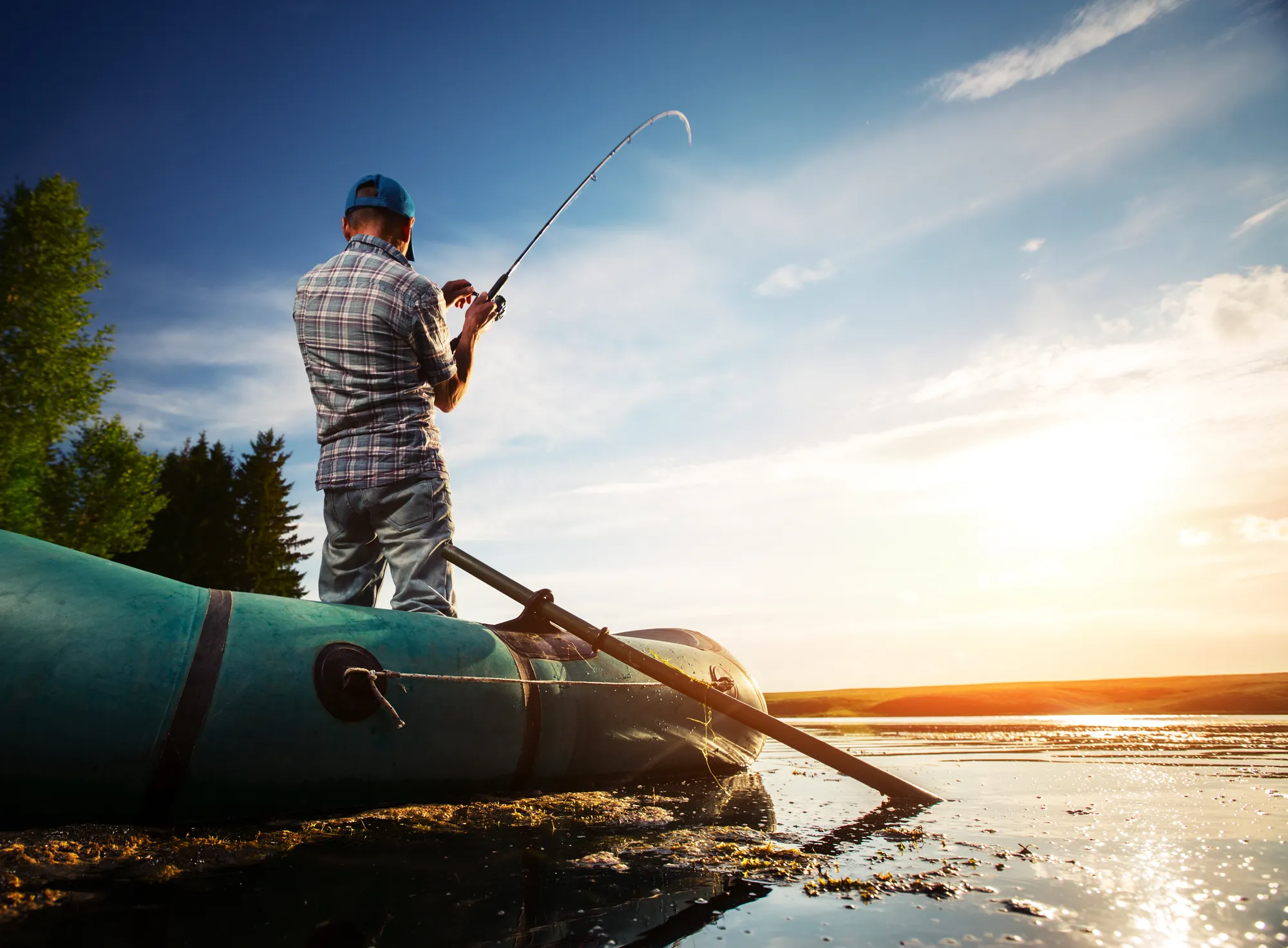
Some people like a lie-in at the weekend. Others set the alarm for four in the morning of their own free will, load the car with enough kit to open a small shop and head for the water. Sometimes in the rain. Sometimes in winter. Sometimes knowing they will probably come home without a single fish.
And they are looking forward to the next trip before this one is over. From the outside it looks like plain sitting. In fact it is a constant round of watching, deciding and experience. And yes, now and then a fair dose of luck. Fish, after all, agree to nothing in advance.
So are anglers mad? If nothing on earth would get you up at four for a fish, perhaps a little. But before you pass sentence, take a look at what they can actually do.
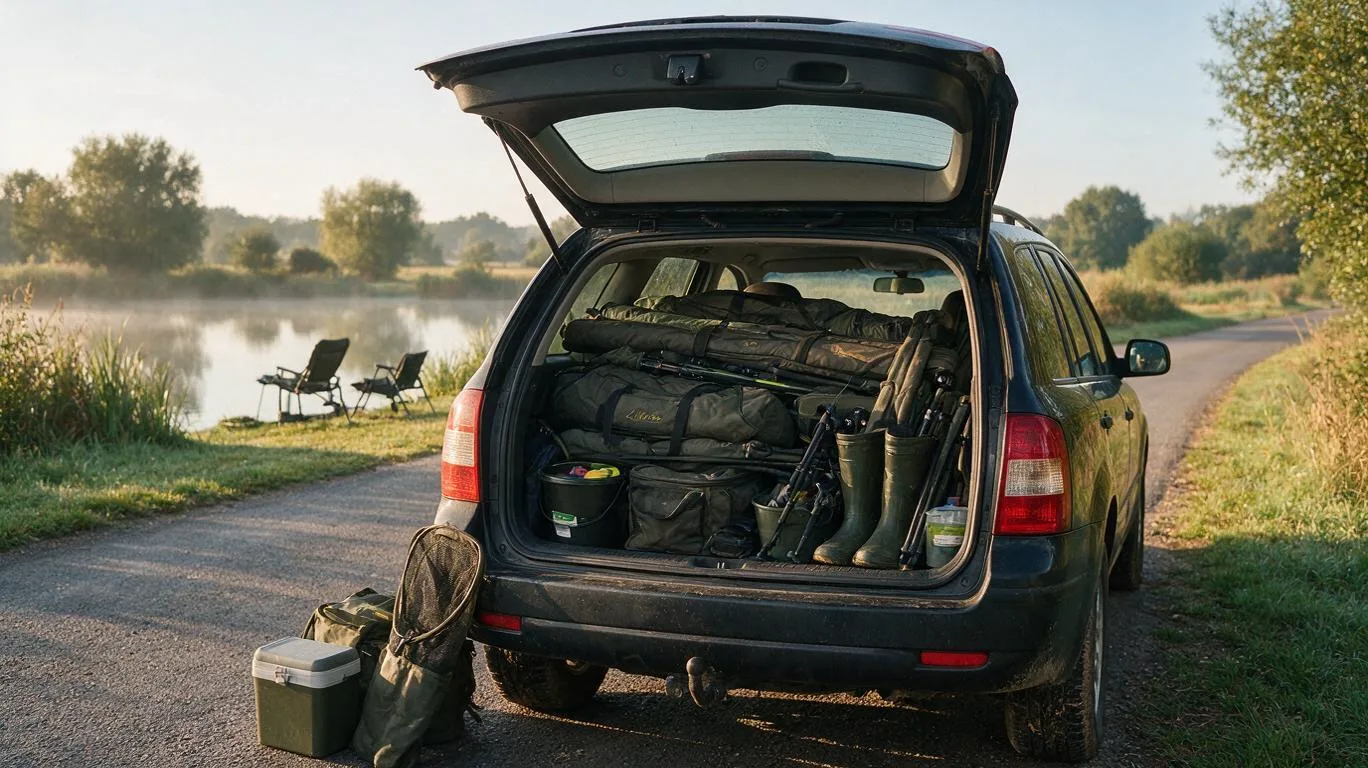
Before the first cast
Are you sure an angler does nothing for eight hours?
By the time the bait first touches the surface, an angler has already made a whole string of decisions. Walk through them.
What will the weather do?
Wind, pressure and cloud cover change where the fish hold and whether they feel like feeding.
How warm is the water?
Fish are cold-blooded: in cold water they save energy, in warmer water they tend to be more active.
What time of year is it?
Fish behave differently in spring, summer and autumn. And some species are in their closed season.
Which fish are you after?
Carp, pike and trout live in different places, eat different things and call for completely different tackle.
Where will you fish from?
Fish are not spread evenly through the water. Two metres to one side may be empty.
How deep will you fish?
A bait in the wrong layer of water means the fish are there but never meet it.
What goes on the hook?
The bait has to match what the fish is eating right now. Not what you happen to have to hand.
How strong a line, and how will you present the bait?
Fine line is harder for a fish to spot but easier to break. And anything that moves unnaturally gets ignored altogether.
Eight decisions. And he hasn’t even cast yet.
Five disciplines, five approaches
Five ways to catch a fish
Ask five anglers how best to catch a fish and you will get five entirely different answers. One will explain why baiting up properly matters most. The second will produce a box of lures. The third will talk about a sensitive rod tip, the fourth about a well-shotted float, and the fifth will show you how to make an insect out of a few feathers and a length of thread.
On the face of it they all do the same thing. But angling is not one discipline with one method. We have picked five distinctive kinds of freshwater fishing. It is not a complete list, but it is enough to show why two people holding a rod may have almost nothing in common beyond a licence.
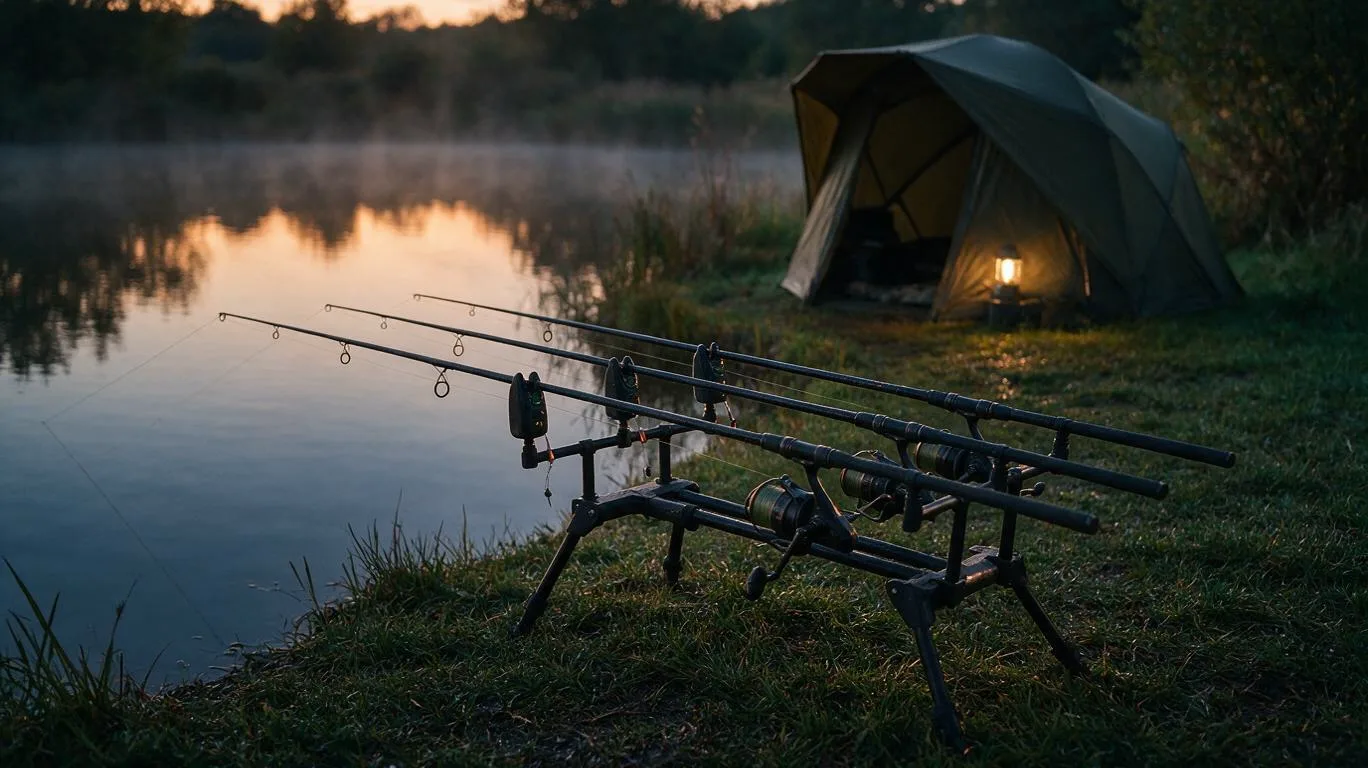
Carp fishing
A game of chess in which the opponent doesn’t know the rules
The decisive moment lasts a few minutes; preparing for it can take hours or days. It all starts with choosing the swim: a carp angler thinks about the lake bed, depth, water temperature, wind and the routes carp patrol in search of food. Then comes the baiting. The point is not to pile in as much as possible, but the right amount in the right place.
The emblem of modern carp fishing is the boilie, a round bait that is not put on the hook itself but on a short hair beside it. The carp sucks in the bait and the hook takes hold in its mouth. The rods rest on a pod and an electronic bite alarm announces the take. And yes, you can catch a carp with far humbler tackle.
- What the angler does
- Preparing the swim, waiting and adjusting tactics
- You spot the bite by
- Bite alarm, movement of the line
- Typical fish
- Carp
‘He said he was only going for the weekend. Judging by the luggage, I thought he was moving out.’
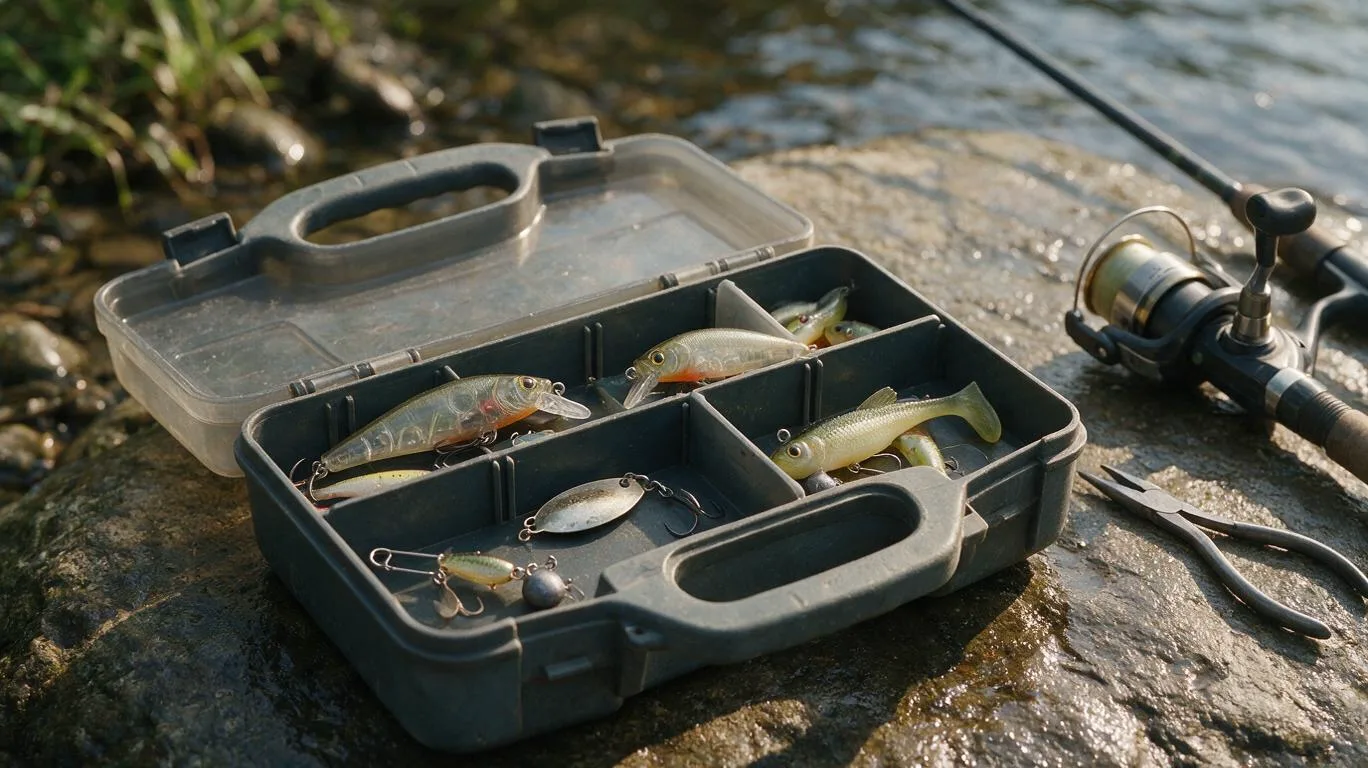
Lure fishing
You don’t find fish by waiting
A lure angler doesn’t sit. He walks the bank, casts an artificial lure and works it through the water to provoke a predator into striking. Plugs imitate small fish, soft lures can be worked along the bottom with pauses, spoons and spinners attract with movement and flash.
Much of lure fishing is searching: current seams, drop-offs, sunken snags, small changes on the surface. If the fish don’t respond, you change the lure, the depth, the speed of the retrieve or the spot itself. And it is not just fast winding. Sometimes a long pause makes the difference.
- What the angler does
- Actively searching the water
- You spot the bite by
- A hit you feel through the rod and line
- Typical fish
- Pike, zander, perch, asp
‘He claimed he was going fishing. Going by the kilometres on his watch, I’d say he’s training for a half marathon.’
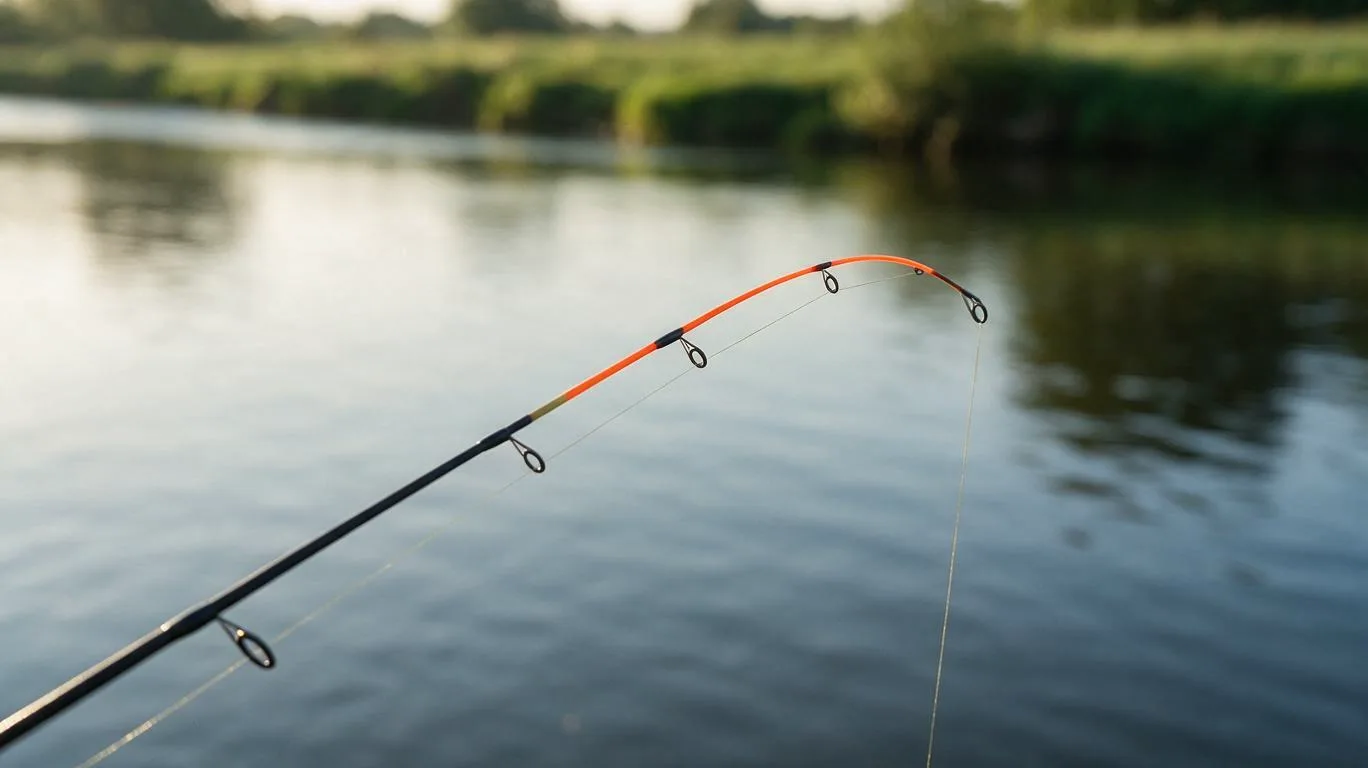
Feeder fishing
When millimetres decide the bite
The angler casts, puts the rod on a rest and watches its tip intently. Feeder fishing is legering with a swimfeeder that delivers groundbait right beside the baited hook. The rod has a fine, interchangeable quivertip. It shows a bite even if the fish doesn’t swim off with the bait: a slight bend, a brief tremble or the line dropping slack is enough.
Accuracy is the key. The feeder should land on the same spot every time so the fish gather there to feed. On a river you need enough weight for the rig to hold bottom in the current. A few centimetres of movement at the tip tell an experienced angler more than a whole rippling surface tells a layman.
- What the angler does
- Accurate casting and watching the tip
- You spot the bite by
- Movement of the quivertip
- Typical fish
- Bream, roach, barbel, carp
‘He watches the end of the rod for twenty minutes. If it moves a centimetre, there’s a story to tell at home.’
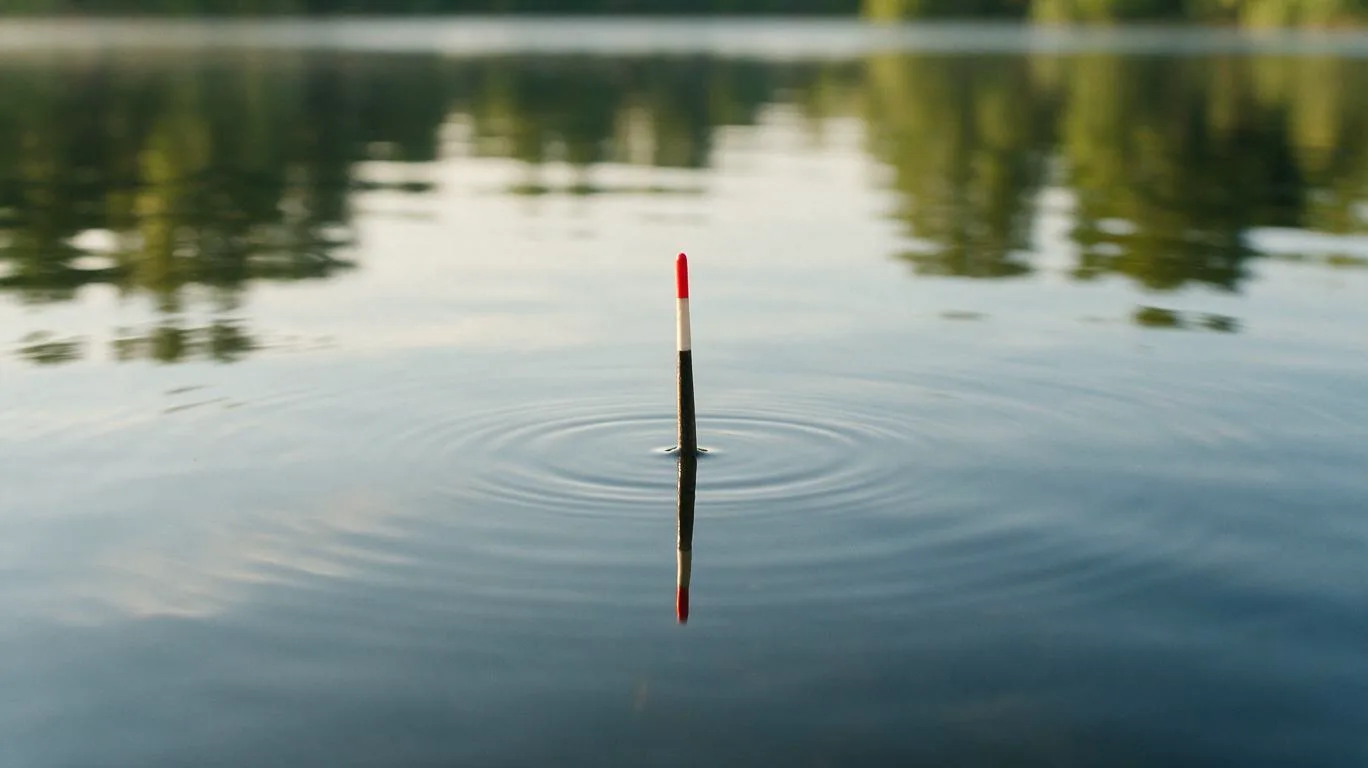
Float fishing
When the whole world watches one float
A figure by the water and a float on the surface: the picture almost everyone has of fishing. The float holds the bait at a chosen depth and signals the bite. It may dip, lie flat, lift or slide off sideways. It is the most accessible way into angling, but its simplicity is deceptive.
The first job is depth. If the bait is in the wrong layer of water, the fish simply never meet it. The second is shotting: small split shot on the line govern how naturally the bait sinks and how sensitively the float reacts. On a river the float is run down with the current so the bait travels a chosen line, known as trotting.
- What the angler does
- Setting the depth and watching the float
- You spot the bite by
- Movement of the float
- Typical fish
- Roach, bream, tench, chub
‘A man who doesn’t notice a new haircut can spend a whole morning watching an object the size of a matchstick.’
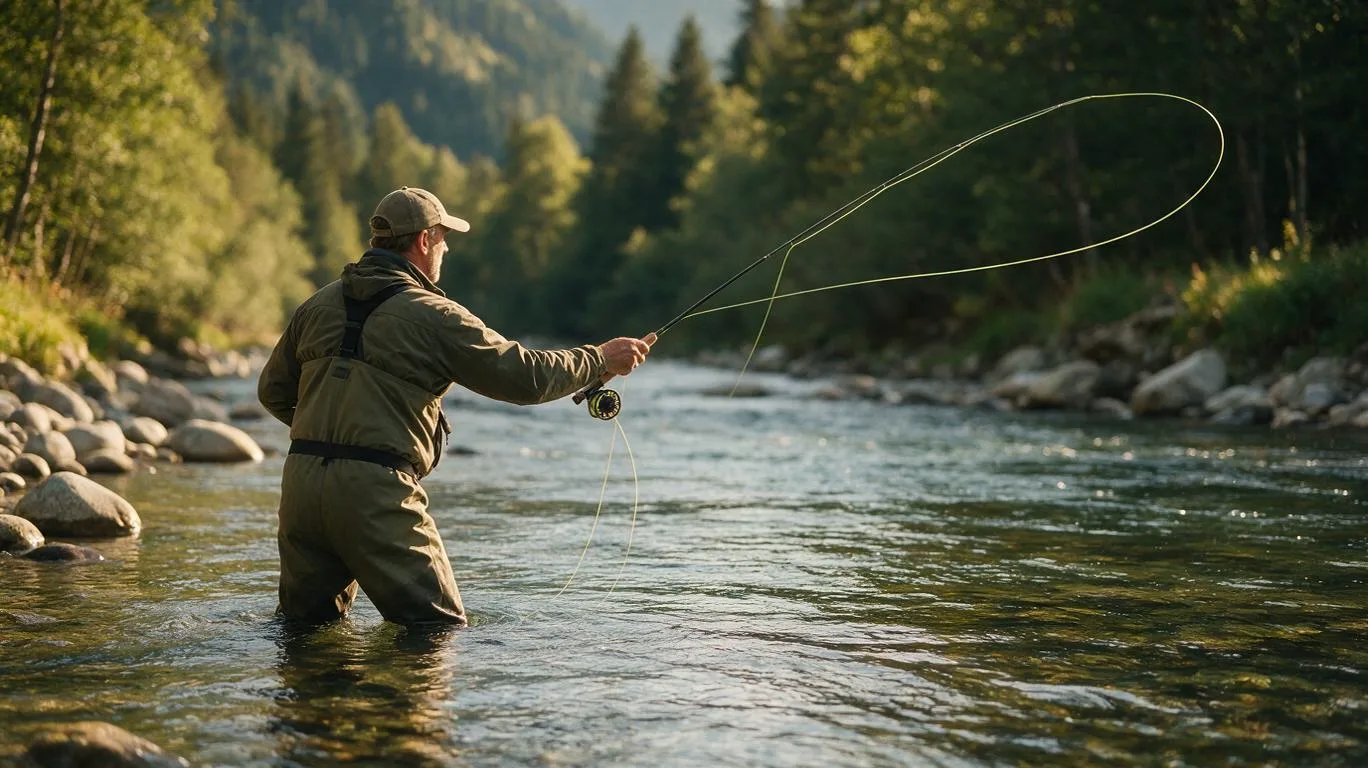
Fly fishing
When the angler tries to think like an insect
You can tell fly fishing by the line unrolling through the air in smooth loops. In lure fishing the lure flies under its own weight. Here the line carries the energy of the cast and the almost weightless fly simply goes along for the ride. It takes coordination, timing and feel.
The fly imitates an insect on the surface, its larvae under water or a small fish. Hence dry flies, nymphs and streamers. So the fly angler watches what is hatching and what the fish are taking. If the current starts to drag the fly in an unnatural direction, a trout will usually refuse it.
- What the angler does
- Casting and presenting the fly
- You spot the bite by
- By sight on the surface, by an indicator or by a pull on the line
- Typical fish
- Trout, grayling and other species
‘All my life I thought flies were something you got rid of at home. He spends his evenings making them.’
The carp angler plans, the lure angler searches, the feeder angler reads faint signals, the float angler works with depth and the fly angler aims for the most faithful illusion. In practice the skills overlap and many anglers use several methods. All of them rest on respect for the fish, the rules and the water.
So next time someone tells you fishing is just sitting by the water, ask them: which fishing do you mean?
A cross-section of the water
What an angler sees beneath the surface
Fish are not scattered evenly through the water like raisins in a cake. They hold where they find cover, food, a bearable temperature and enough oxygen – and those places can be read from the bank.
So let us slice the water twice: once still, once running. Scroll from the bank into the deep and see who usually lives where.
The rest of us see water. An angler sees depth, current, snags, food and roughly seventeen reasons to cast two metres to the side.
Stillwater: pond and reservoir
Depth: up to 1 m
Shallows and reeds
Shallow water warms first in spring, so fish come here for warmth, food and, in many cases, to spawn. The reeds are also a nursery for fry – and therefore a canteen for predators.
Who lives here commontenchnortherncrucian
How it is fished Float fishing
Tread quietly here. A fish in half a metre of water hears your footsteps long before you spot it.
Depth: 1–2 m
Lily pads and weed beds
Plants give shade, cover and, by day, oxygen, and their leaves are covered in small food items. The edge of the weed is a typical line that fish patrol and where pike lie in ambush.
Who lives here tenchcruciannortherngrass
How it is fished Float fishing
Fish tight to the edge of the pads. The tench will then show you it knows the way in better than you know the way out.
Depth: 1–3 m
Snags and sunken trees
A fallen tree, stumps or boulders are to fish what a roof is to us. Small fish gather around them, and where there are small fish there is usually someone hunting them.
Who lives here Europeannorthernwels
How it is fished Lure fishing
The best spots cost the most lures. Think of it as the entrance fee.
Depth: 2–4 m
Drop-off and ledge
Where the shallows fall away into deeper water lies a fish motorway: within a few metres a fish can choose its depth, temperature and light. Food also collects at the foot of the slope.
Who lives here zanderEuropeancommoncommon
How it is fished Feeder fishing
Plumb the bottom first, feed second. Two metres to the side can be a different world.
Depth: surface to mid-water
Open water
It looks empty, but shoals of small fish roam it after plankton, with predators in tow. In summer, life in deeper reservoirs concentrates in the warm, oxygenated layer above the thermocline.
How it is fished Lure fishing
Watch the surface. When small fish scatter in every direction, someone underneath is having lunch.
Depth: 4 m and more
Deep hole and old river bed
The deepest water has the steadiest temperature, so fish often gather there for winter. In summer it can be a trap for the angler: below the thermocline there may be almost no oxygen, and the fish stay higher up.
Who lives here welszandercommoncommon
How it is fished Carp fishing
Deepest does not mean best. In August you may be fishing a hole in which nobody is at home.
Running water: the river
Depth: up to 0.5 m
Riffle
Fast, shallow water over gravel is the best-oxygenated part of the river and a factory for aquatic insects. Fish sit behind stones, where the current costs them less, and many current-loving species spawn on the gravel.
Who lives here graylingbrownbarbel
How it is fished Fly fishing
Knee-deep water, a fish behind every decent stone. Fish it before you wade it.
Depth: 1–2 m
Main current
The main current is the river's conveyor belt, carrying food and oxygen. The water is slower near the bed than at the surface, and that is where fish built for the flow hold station.
Who lives here barbelaspgrayling
How it is fished Feeder fishing
The feeder should stay put, not travel to the next county. Go heavier rather than lighter.
Depth: 0.5–1.5 m
Current seam
The line where fast water meets slow. A fish rests in the slack while the current delivers food past its nose – minimum effort, maximum intake.
Who lives here brownrainbowroach
How it is fished Float fishing
Run the float exactly down that line. Half a metre off and it is a different river.
Depth: 2–4 m
Weir pool
Falling water scours a deep pool and fills it with oxygen, which fish value most in summer. The weir also stops fish moving upstream, so prey and predators both gather below it.
Who lives here aspzanderwelsbarbel
How it is fished Lure fishing
Weir water is beautiful and treacherous. Admire it from the bank – the undertow makes no exceptions.
Depth: 0.5–2 m
Undercut bank and roots
The current hollows out the bank, and tree roots shore it up and shade it. The result is a hide with a roof, from which a fish need only dart half a metre for a mouthful and slip back.
Who lives here brownEuropeannorthernEuropean
How it is fished Lure fishing
The best trout usually lives under the one bush you cannot cast beneath.
Depth: 1–3 m
Slack water and backwater
Calm water out of the flow behaves almost like a pond: warmer, weedier and soft-bottomed. Fish sit out floods and winter here, and many of them spawn here.
Who lives here northerntenchcommoncommon
How it is fished Carp fishing
When the river runs brown and pushy after rain, look for fish where you would shelter from the flow yourself.
These are typical situations, not rules: fish move with the season, time of day, temperature, oxygen and food, so no species has a permanent address.
A year on the water
Twelve months, twelve different situations
Fish are cold-blooded, so their appetite, movement and breeding are run by water temperature and day length. The same water in March and in August is very nearly a different fishery.
Go through the year month by month and you will see why an angler has not one season but twelve.
JanuaryLife runs slowly under ice
In the water. Water is densest at about 4 °C, so it is slightly warmer near the bottom than just under the ice. Fish keep to deeper, quiet spots and save energy.
On the bank. Fishing is fine and slow: small baits, thin lines, short feeding windows around midday. Most anglers, meanwhile, sort their tackle boxes and call it tidying.
Fish of the month
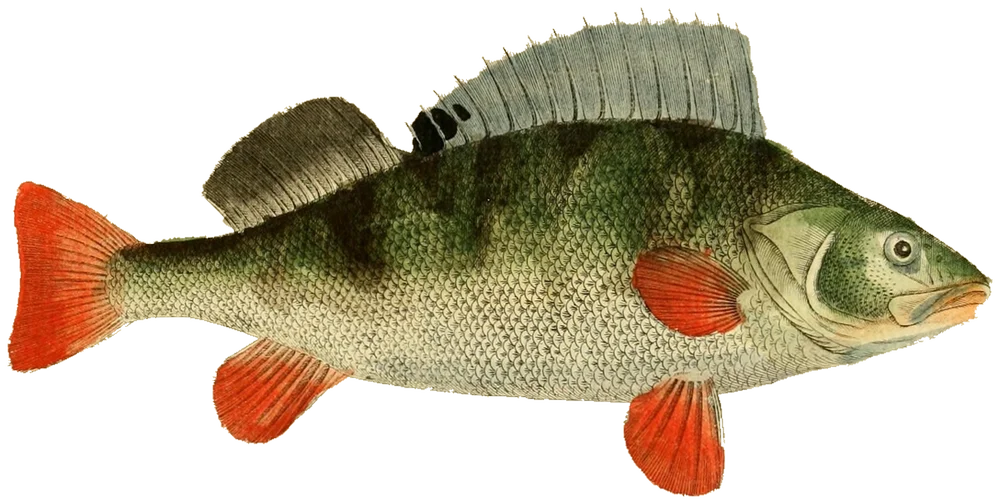 EuropeanPerch shoals drop into deeper water but go on feeding through the winter.
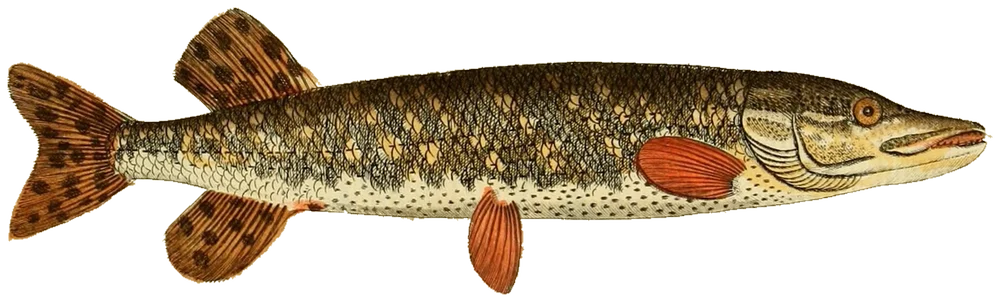 NorthernPike still hunt in cold water, only more slowly and with longer pauses.
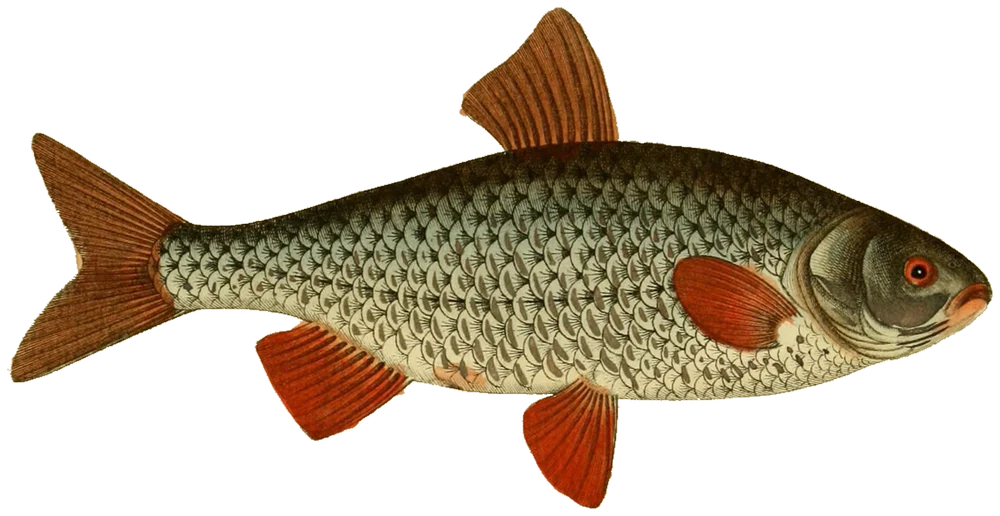 RoachRoach overwinter in deep water and quiet backwaters, where they will now and then take a small bait.
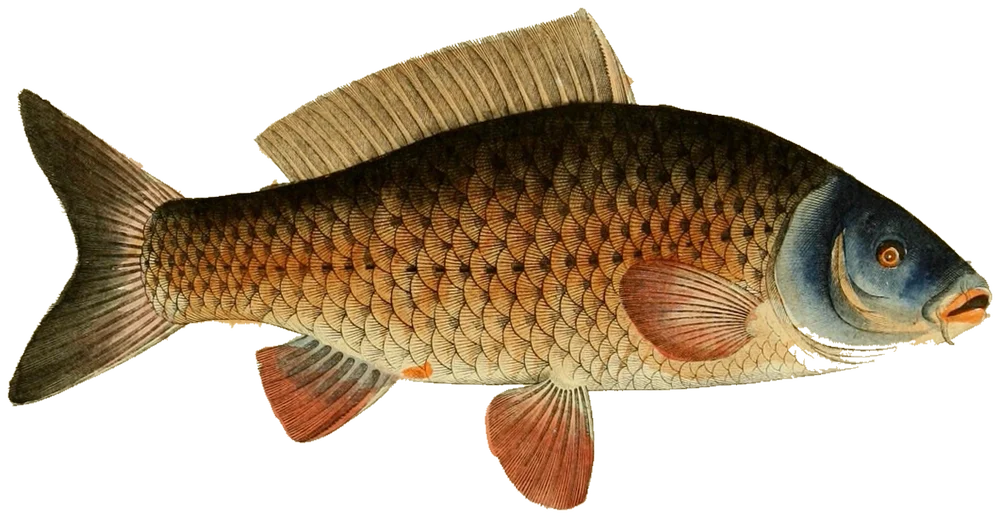 CommonThe carp's metabolism has slowed right down; it sits in deeper spots and eats very little.
FebruaryLonger days, loosening ice
In the water. The water is still cold, but the light is returning and shallow bays begin to warm on sunny days. Snowmelt raises and colours the rivers.
On the bank. Anglers look for the warmest water on the fishery – sunny, sheltered shallows and quiet backwaters. Baits are worked slowly; a fish that is not properly awake will not chase anything.
Fish of the month
- NorthernPike start moving towards the shallow, weedy margins where they spawn as winter turns to spring.
- RoachOn milder days roach leave their wintering spots for short feeding trips.
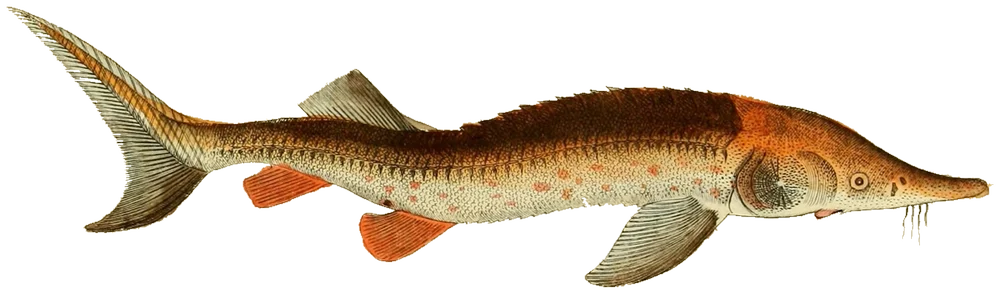 SterletThe sterlet winters in deep river holes and shows little activity.
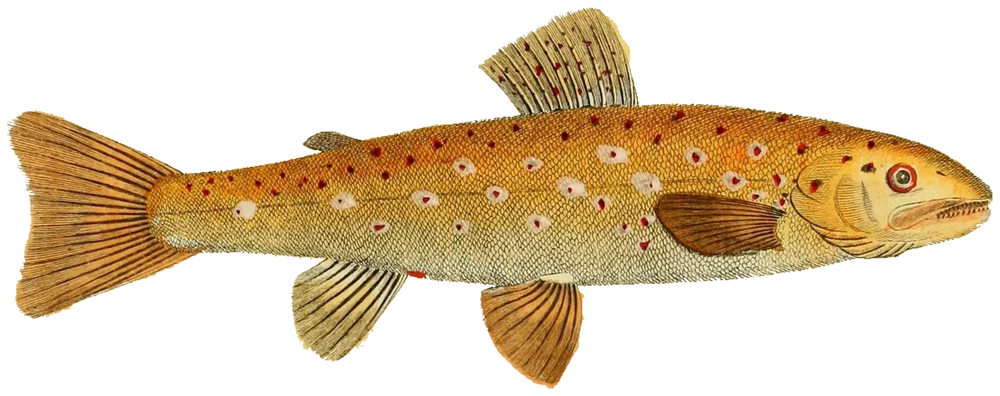 BrownBrown trout are spent after their autumn spawning and recover only slowly in cold water.
MarchPike open the wedding season
In the water. The ice goes and the shallows warm faster than the deeps. The first species spawn in water of only about 7–9 °C, often over flooded grassy margins.
On the bank. Coarse fish begin to stir, so float and feeder fishing come alive in shallower, warmed water. Spawning fish are best left in peace – many species are protected at this time.
Fish of the month
- NorthernPike spawn in early spring, usually March to April, in weedy shallows.
- EuropeanPerch spawn in spring while the water is still cool, draping their eggs in long ribbons over plants and branches.
- CommonCarp wake up and move into the shallows for warmth, where they begin to feed cautiously.
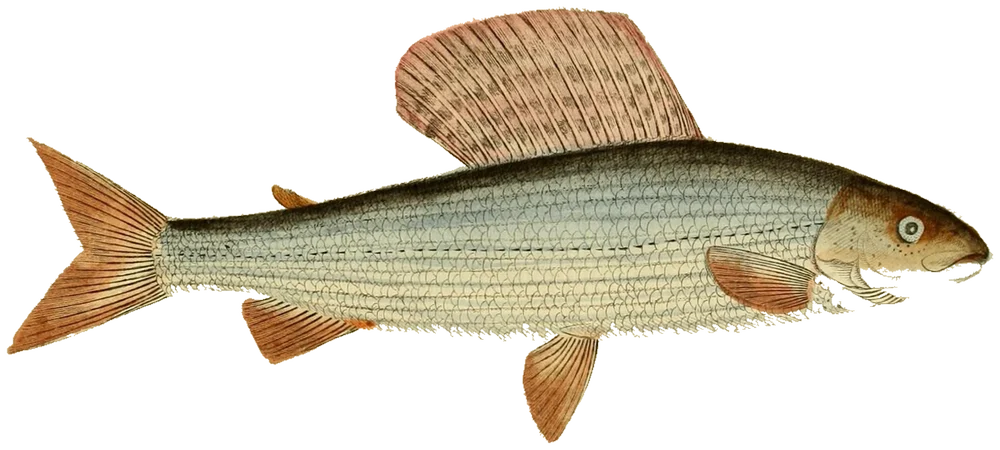 GraylingIn spring grayling move onto shallow, flowing gravel runs, where they will spawn.
AprilThe water wakes in earnest
In the water. Temperatures climb past 10 °C, water plants start to grow and insects multiply. The weather is fickle, though: a cold front can switch the fish off again for days.
On the bank. Fish are hungry after winter and feed through the day, best in the afternoon when the water is warmest. The angler dresses for four seasons at once and usually gets three right.
Fish of the month
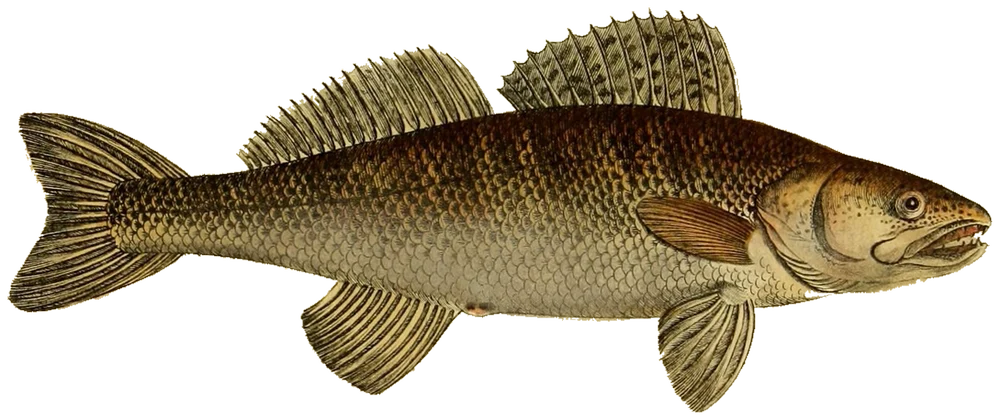 ZanderZander spawn mostly in April and May, once the water reaches 10–14 °C; the male guards the nest of eggs.
- GraylingGrayling spawn in spring over clean gravel in shallow, flowing water.
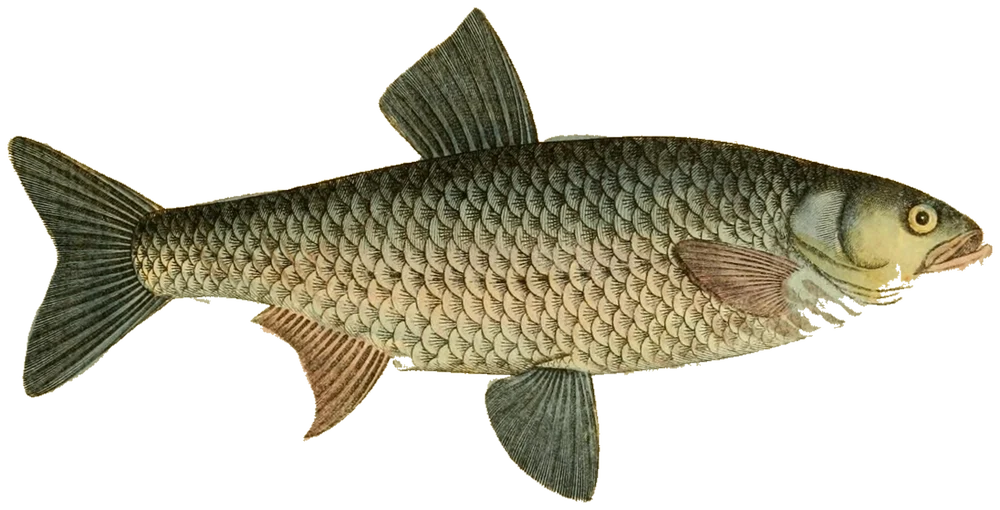 AspIn spring asp run upstream and spawn in fast water over gravel.
- SterletThe sterlet leaves its winter holes and moves upstream to gravel spawning grounds.
MayThe shallows belong to the cyprinids
In the water. The water nears 15–20 °C and the weedy shallows are all splashing: roach, bream and carp are spawning. On the rivers the mayflies are hatching.
On the bank. For fly anglers this is one of the high points of the year; on stillwaters, feeder and float fishing do well. Fish busy spawning ignore baits, so it pays to find those that have finished and are hungry.
Fish of the month
- RoachHere roach usually spawn among plants from early May to early June.
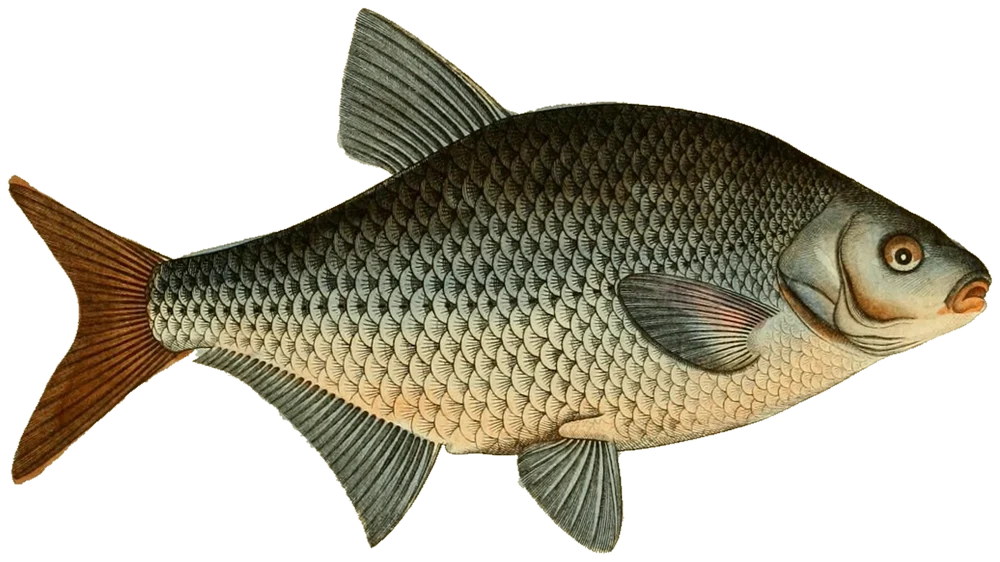 CommonBream gather in weedy shallows and spawn once the water passes roughly 12 °C.
- CommonCarp spawn at 15–20 °C, usually in May and June, in shallow, weedy margins.
- BrownBrown trout are in peak condition, picking hatching insects off the surface.
JuneThe warmth-lovers take their turn
In the water. The water reaches about 20 °C, the weed is thick and the days are the longest of the year. Species that need real warmth now spawn, and the shallows teem with fry.
On the bank. Fishing is done early and late along the weed edges; at midday you are better off hunting for shade. The longest days mean the shortest nights – suddenly the 4 a.m. alarm makes sense.
Fish of the month
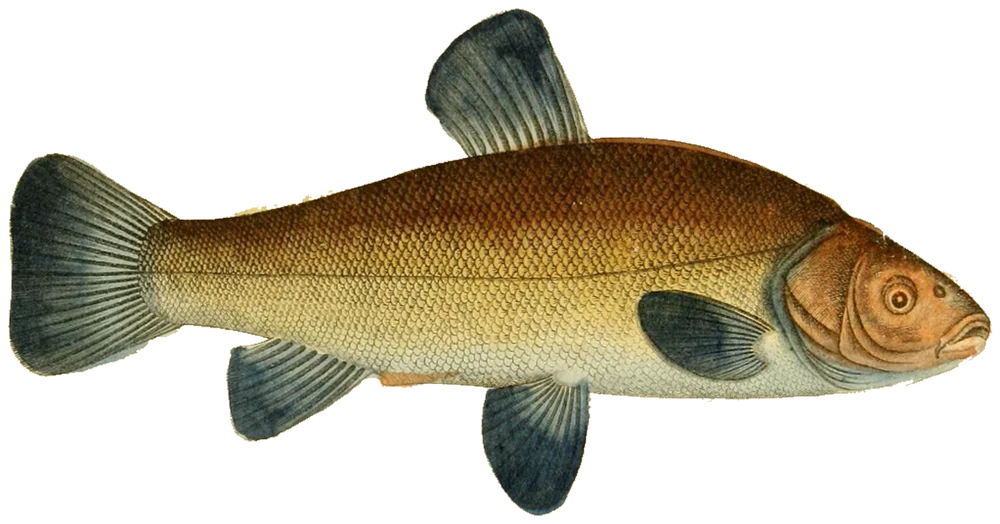 TenchTench spawn only in warm water of about 19–20 °C, which makes them one of the late species.
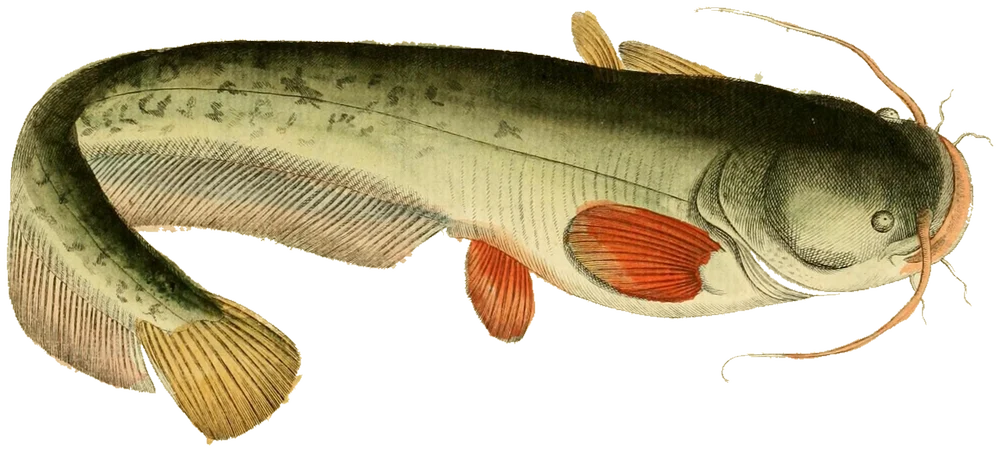 WelsWels catfish spawn at around 18–22 °C; the male builds a nest of plant material and guards the eggs.
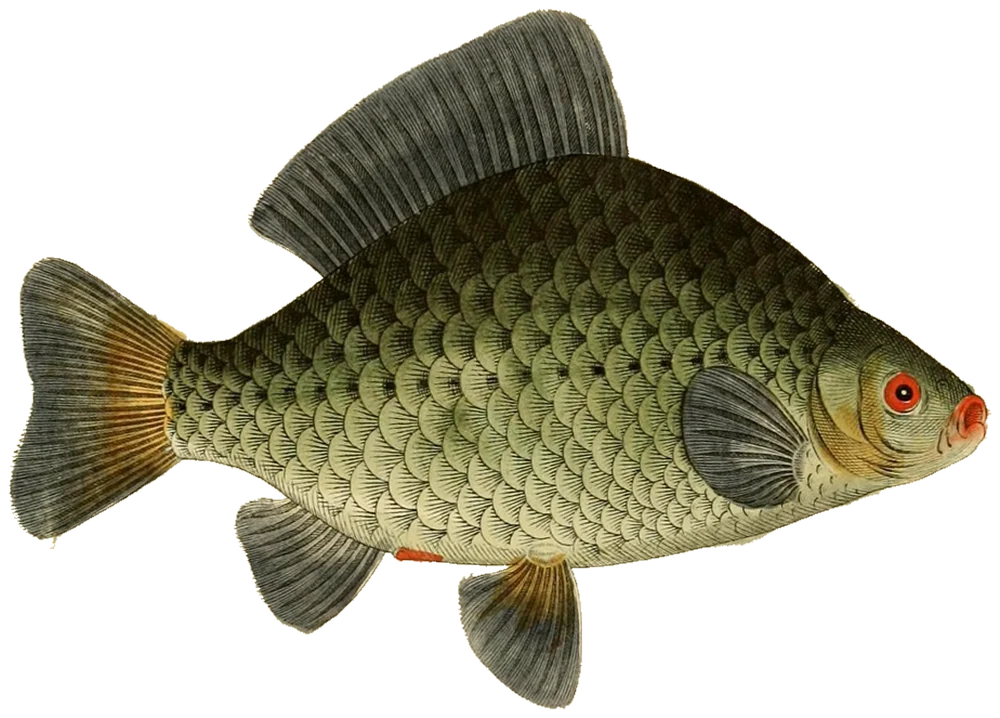 CrucianCrucian carp breed in May and June in shallow water with dense vegetation.
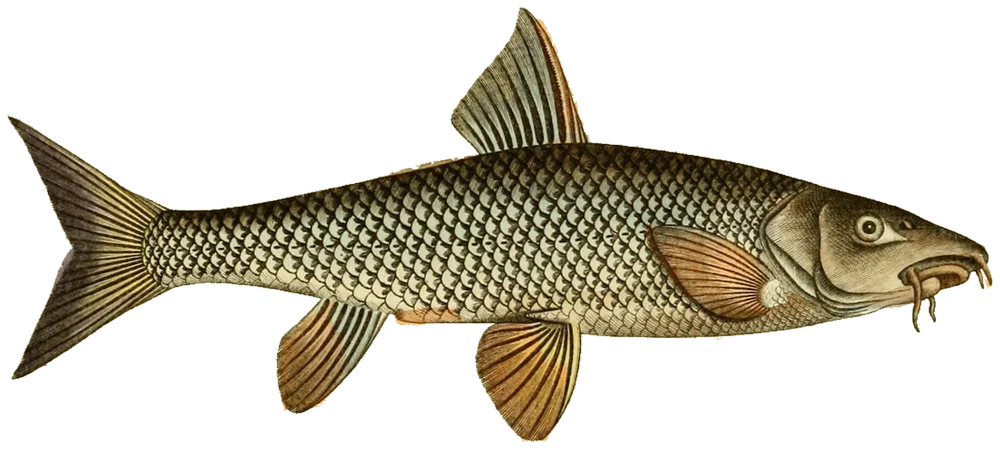 BarbelBarbel move upstream and spawn on shallow, fast riffles between May and July.
JulyHeat and the thermocline
In the water. Deeper stillwaters stratify: warm water on top and, below the thermocline, cold water that gradually loses its oxygen. Warm water also holds less of it, so fish seek out inflows, current and wind-ruffled banks.
On the bank. The fishing shifts to dawn, dusk and night. In the heat a fish must be returned quickly and gently – the temperature exhausts it more than the fight with you does.
Fish of the month
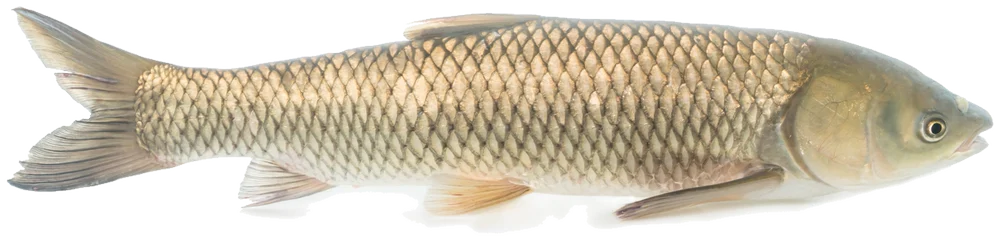 GrassGrass carp are in their element in warm water and graze an impressive amount of weed.
- WelsThe warmth-loving wels hunts in summer mainly at dusk and by night, often in the shallows too.
- AspAsp harry shoals of small fish at the surface, and you can hear the strikes from the far bank.
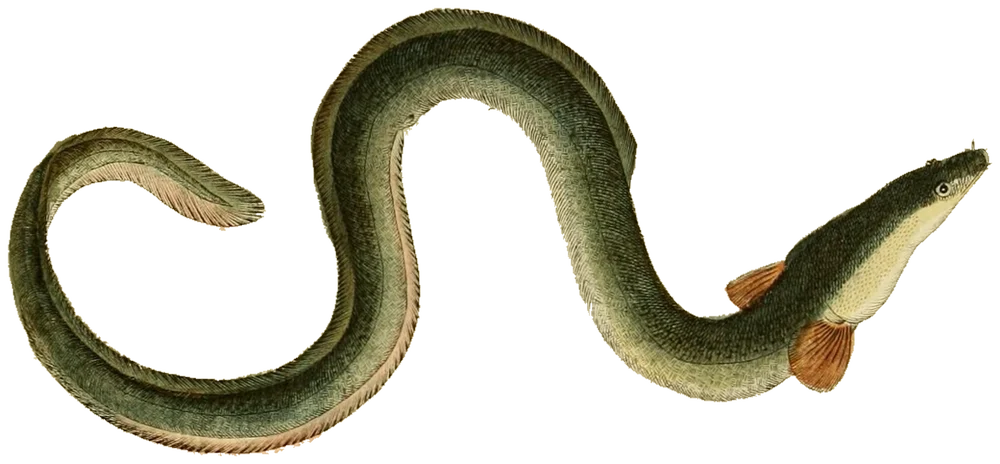 EuropeanEels forage on warm, dark nights; the species is critically endangered and deserves consideration.
AugustWarmest water, least oxygen
In the water. The water is at its warmest and fertile ponds bloom with algae and cyanobacteria. Oxygen is lowest just before dawn, after plants and algae have spent the whole night only using it up; rivers run low.
On the bank. Look for fish where the water moves: below weirs, in the current, near inflows and on the windward bank. Deep reservoir holes may be empty below the thermocline.
Fish of the month
- CommonIn hot spells carp feed mainly at night and around dawn, spending the day in the shade of the weed.
- ZanderZander hunt at dusk and through the night, following small fish even into shallower water.
- BarbelBarbel keep to the oxygen-rich current and the water below riffles, where there is still something to breathe.
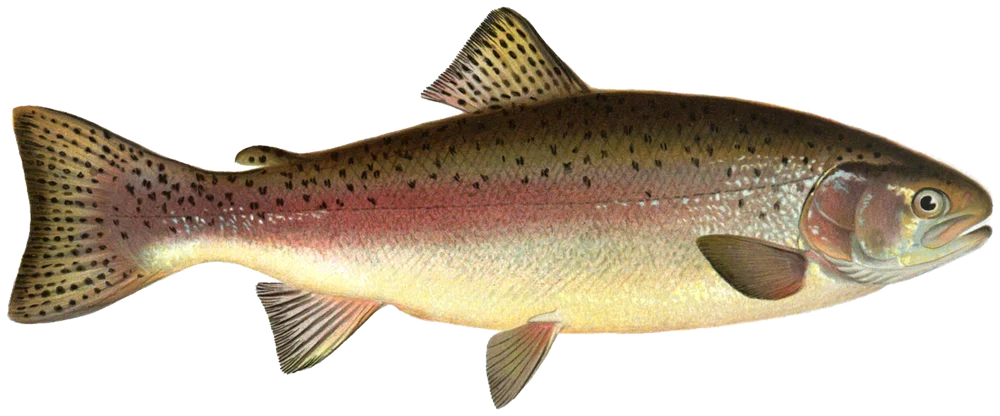 RainbowRainbow trout need cool, oxygenated water and suffer in the heat; they seek out inflows and springs.
SeptemberCooling water, growing appetite
In the water. The nights draw in and the water cools to temperatures that suit fish best. Oxygen levels rise, and this year's fry are now just big enough to be worth a predator's trouble.
On the bank. For many this is the best month of the year: fish feed all day and settled weather favours longer sessions. Carp anglers feed more, lure anglers walk further.
Fish of the month
- CommonCarp feed hard, laying down reserves for winter.
- EuropeanPerch herd fry in packs, and the gulls overhead often give away exactly where.
- NorthernPike liven up as the water cools and hunt along the thinning weed edges.
- CommonBream shoals return reliably to baited spots and linger there for longer.
OctoberThe water mixes, predators feed
In the water. The surface cools, summer stratification breaks down and the autumn turnover returns oxygen to the whole water column. The weed dies back, so small fish lose their cover.
On the bank. The golden time for lure fishing: predators are fattening up for winter and can be found on ledges and snags. Lures get bigger, retrieves get slower and the gloves come down from the loft.
Fish of the month
- NorthernPike feed heavily before winter; autumn tends to be the time of big fish.
- ZanderZander follow the shoals of small fish into deeper water along the drop-offs.
- GraylingGrayling are on form in cooling water, readily taking nymphs and small insects from the surface.
- BrownBrown trout run upstream to gravel spawning grounds; they spawn in autumn.
NovemberShort days, deeper water
In the water. The water cools fast and runs clearer now the algae have gone. Fish bunch up and drift towards deeper, quieter places; on the trout streams spawning is under way.
On the bank. Find the shoal and you have found everything – the fish are packed into a small area. Fishing is done around midday, delicately and with a flask; on trout waters it is time to leave the fish alone.
Fish of the month
- BrownBrown trout usually spawn in October and November, burying their eggs in gravel.
- NorthernPike go on feeding in cold water and, with the weed gone, hold by snags and ledges.
- RoachRoach mass in large shoals in deeper areas and quiet backwaters.
- EuropeanOn dark autumn nights adult eels set off downstream towards the Sargasso Sea; they do not spawn in our waters.
DecemberWinter torpor sets in
In the water. The water approaches 4 °C, the days are the shortest of the year and ice may form on stillwaters. Warmth-loving species all but stop feeding.
On the bank. What remains are the species that do not mind the cold and the anglers who do not mind it either. The rest tie rigs, study depth charts and are already fishing March in their heads.
Fish of the month
- TenchTench often overwinter buried in the mud, and you will not hear from them until spring.
- CrucianCrucian carp survive oxygen levels under the ice that would finish off other fish.
- WelsThe warmth-loving wels is barely active in winter and keeps to deep water.
- GraylingGrayling are fish of cold water and keep feeding in winter, mainly in deeper, steadier runs.
Timing shifts with altitude, weather and the particular water; many species are protected while spawning, and closed seasons differ by country and by water – always check the local rules.
This really happened
Records, legends and tall tales
Every angler has a fish of a lifetime. Some have it in several versions. Most memories fade with time; memories of big fish do exactly the opposite.
Yet it would be wrong to dismiss every unbelievable story as invention. The real world of angling has tales no sensible storyteller would make up, because nobody would believe them. Here are three of which an angler can safely say: this really happened.
-
134.97kg
The catfish that weighed almost 135 kilos
A Hungarian angler from the town of Ajka was fishing the Po with a guide when he hooked a catfish that pulled the scales to 134.97 kilograms. That is roughly the weight of two grown men. And all of it, at the other end of the line, is trying to swim in exactly the opposite direction to the one you would like.
An All-Tackle record does not mean nobody has ever caught a longer or heavier catfish. It means this catch was weighed and documented according to the rules. Having a huge fish is one thing. Proving it is another.
- Who
- Attila Zsedely
- When
- 11 March 2010
- Where
- River Po, Italy
- Category
- IGFA All-Tackle world record for wels catfish
-
10.12kg
The record that survived 77 years by a single ounce
In 1932 George Perry caught a largemouth bass in Georgia weighing 22 lb 4 oz, about 10.09 kilograms. In a country where bass fishing is close to a national sport, the catch became a legend. Generations tried to beat it.
Not until 2 July 2009 did Manabu Kurita pull a 10.12-kilogram fish from Lake Biwa in Japan. It was about one ounce heavier. But for fish under 25 lb, IGFA rules require a new record to beat the old one by at least two ounces, just under 57 grams. The result: the two men share the record. Try explaining that down the pub.
- Who
- Manabu Kurita and George Perry
- When
- 1932 and 2009
- Where
- Montgomery Lake, Georgia, USA · Lake Biwa, Japan
- Category
- IGFA All-Tackle world record for largemouth bass, shared by two anglers
-
18.25kg
The trout that defied every idea of light tackle
The retired Air Force lieutenant colonel was holding a short ultralight rod, line of four pounds’ breaking strain, which is under two kilograms, and a tiny olive marabou jig. The brown trout that took it weighed 18.25 kilograms. He played it for about twenty minutes.
For seventeen years it was the heaviest recognised brown trout in the world, until a Michigan fish beat it in 2009. If you have just ordered another extra-heavy rod, you may want to skip this part.
- Who
- Howard ‘Rip’ Collins
- When
- 9 May 1992
- Where
- Little Red River, Arkansas, USA
- Category
- IGFA All-Tackle world record for brown trout from 1992 to 2009; since beaten

Tall tales: the only discipline in which the fish keeps growing after it is caught
This discipline needs no permit, rod or bait. A good memory, a taste for storytelling and an audience that doesn’t ask too many questions will do. Anglers’ tall tales turn an ordinary fight into a battle with the elements, and the fish that came off just short of the landing net was always the biggest.
The nice thing is that both sides know the game. The listeners know the story has been coloured in a little, and that is its charm. The fewer the witnesses, the more room for imagination.
But a tall tale is not a record. A record needs a correctly identified species, weighing or measuring, and paperwork. So keep to one simple rule: the more unbelievable the story, the more interesting it is to ask for a photo, a weigh slip or at least a witness.
- Monday, the facts8 kg‘Nice carp. Eight kilos, on the scales.’
- Friday, the pub10 kg‘Ten at least. Those scales always read light.’
- A year on, a family party15 kg‘Fifteen kilos. I played it for an hour, in the dark.’
- Ten years on, the grandchildren24 kg‘Twenty-four kilos. No photo, my phone had died.’
Fact or tall tale?
Eight statements that sound unbelievable. Five are documented, three we made up. Can you tell which?
 BonusWhen the Village Pond is No Longer EnoughA short detour to big water: seven places where an angler's daydreams turn into a proper adventure.Head out to sea
To finish
What anglers know and nobody else believes
Myth 1An angler just sits and waits.
How it really is. Before he sits down he has made eight decisions. And a lure angler doesn’t sit at all: he walks kilometres of bank in a day.
Myth 2You don’t need any special knowledge to fish.
How it really is. You need to read the water, know the fish, the weather and the season, and handle your own tackle. Starting is simple; the learning lasts a lifetime.
Myth 3Every fish will take a worm.
How it really is. A worm is a good bait, but not a universal one. Carp take boilies, pike a plug, and trout a fly made of a few feathers. What counts is what the fish is eating right now.
Myth 4Expensive tackle automatically means a better catch.
How it really is. An 18.25-kilogram trout was landed on line with a breaking strain of under two. Skill decided it, not the price tag.
Myth 5If you let the fish go, the whole trip was pointless.
How it really is. For many the aim is to find the fish, outwit it and return it carefully to the water. There are even world records for which the fish must swim away alive. And taking a fish within the rules is just as legitimate.
Myth 6Fishing is only for older blokes.
How it really is. By the water you will meet children with their first float, women, and twenty-somethings who cover more ground with a lure rod than on a hike. The fish doesn’t care about age or sex.
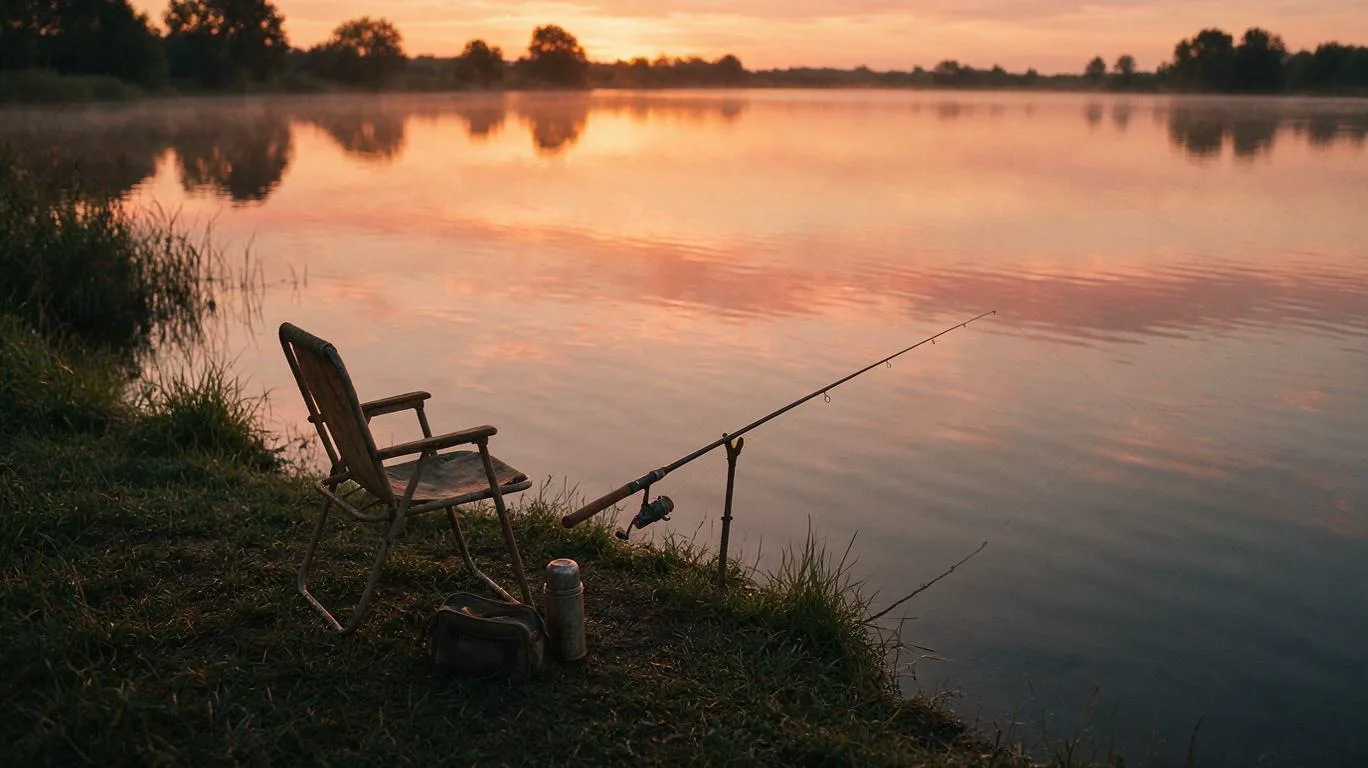
Still think anglers are mad? Maybe. But now at least you know why.
 Fish atlasWho Actually Lives in Our Waters?
 Step 1Your First Trip: From First Rod to First Bite