Magazine
When Paris Sent Messages by Balloon
You Have a New Message · history
September 1870. German troops surrounded Paris and cut every road and telegraph wire. Two million people remained in the city, with no connection to the outside world.
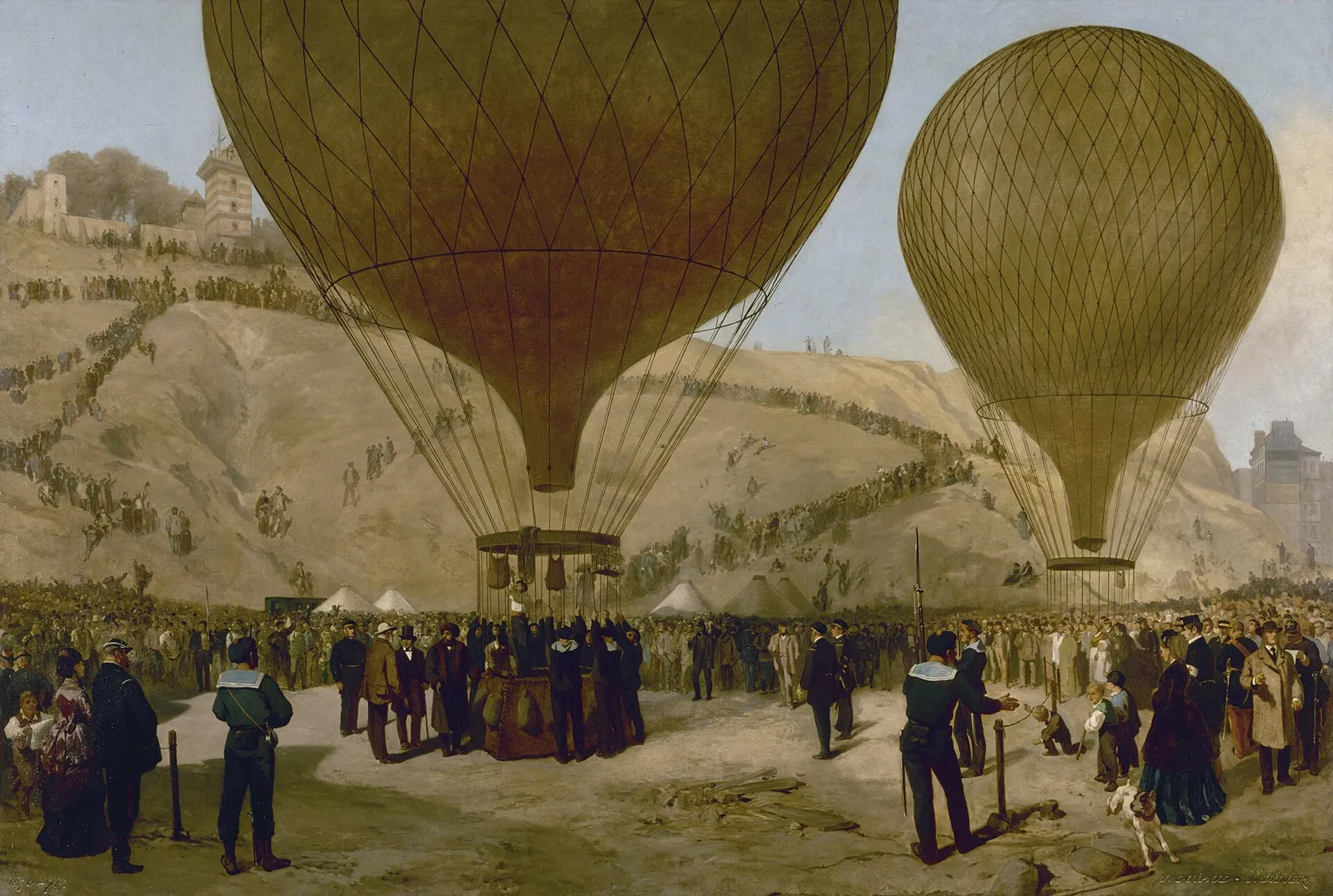
During the four months of the siege, Parisians came up with a balloon post, microfilm for pigeons and balls floating down the river. Some of it worked brilliantly, some not at all.
Mail That Flies with the Wind
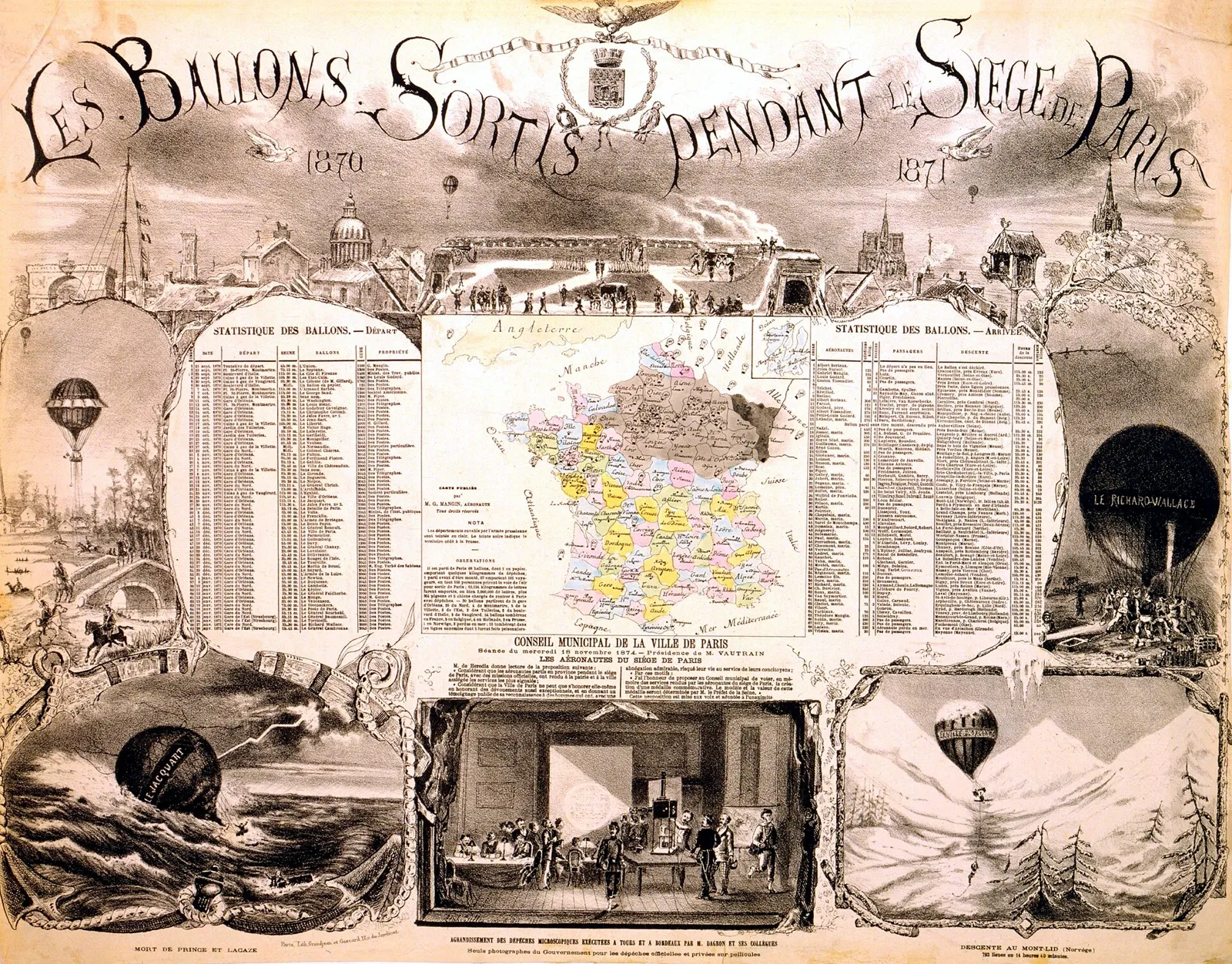
Within a few days, the director general of the postal service set up a balloon post. The balloons were filled with coal gas and had a basket for the pilot and now and then a few passengers. During the siege, 67 of them took off from the city, carrying more than 11 tonnes of mail, an estimated two and a half million letters.
The catch was that the balloons couldn’t be steered. They went wherever the wind blew. Some came down after a few kilometres, one flew all the way to Norway, and six were shot down by the enemy.
A Minister in the Top of an Oak
On 7 October 1870, Interior Minister Léon Gambetta left Paris by balloon. The balloon came under fire, had to climb, and after 98 kilometres ended up in the branches of an oak tree. It took Gambetta three more days by carriage and on foot to reach Tours, where the government had its backup seat.
Pigeons Fly Back In
A balloon could get out, but not in. So the balloons also carried pigeons from Parisian lofts. From Tours, the birds then flew home with messages. At first these were written in tiny script, later reduced photographically, rolled up in a goose quill tied to a tail feather.
The photographer René Dagron left Paris by balloon in November. A second balloon carrying his equipment and pigeons was shot down, and Dagron himself only narrowly escaped capture. Even so, from mid-December all dispatches ran on his microfilm, reduced more than forty times. One film weighed about five hundredths of a gram, and a pigeon could carry up to twenty.

Projected in a Hall
In Paris, the film was placed between two sheets of glass and projected onto a screen with a magic lantern. Clerks copied the messages onto forms, and the post office delivered them to the addressees. A private message by pigeon post could have no more than twenty words and cost five francs.
Not every pigeon was a postman, though. According to Le Figaro at the time, in December Parisians caught an exhausted pigeon on the rue de Rivoli, hoping it carried a dispatch. It was a perfectly ordinary street pigeon.
The Balls No One Caught
The boldest idea was the so-called boules de Moulins. From January 1871, zinc balls packed with letters were floated down the Seine towards Paris, where nets were supposed to catch them. Not one was caught. Some were found only years later, the last in 1982.
The siege ended with an armistice on 28 January 1871. Throughout it all, Paris managed to talk to the world, even if only in one direction and with long delays.
The Paris balloon post shows that people in need will invent almost anything. And also that every communication system has a weak spot. Here it was the wind.