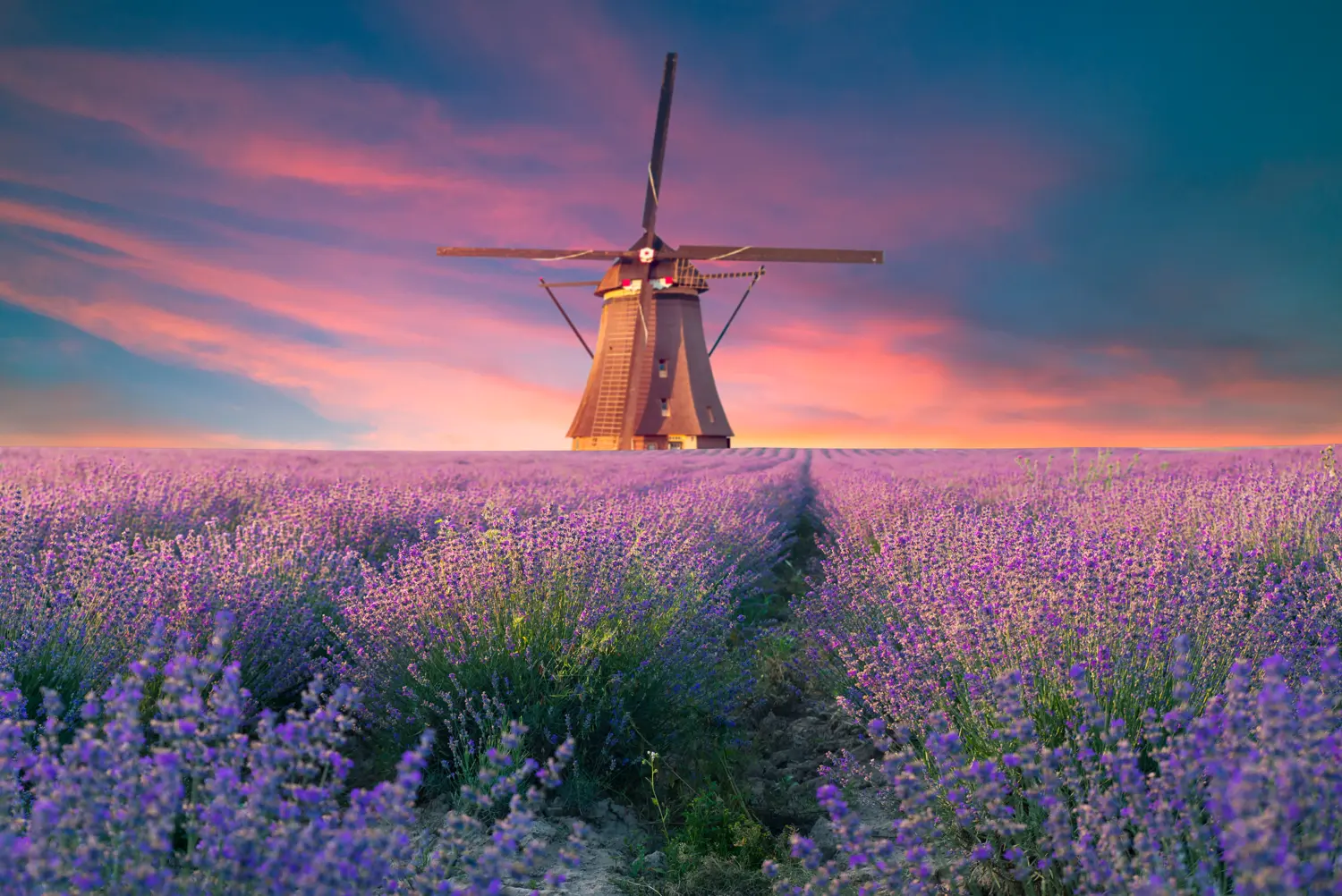
Provence: Its History, What to See and What to Taste
Whenever God begins to doubt the world, he remembers that he created Provence...
Frédéric MistralSweet Provence – it lures us with the scent of lavender, garlic and wine. Decadent and romantic at once. The very embodiment of French elegance and love of life.

Where it is
Where to find the paradise called Provence?
It is hard to believe there is anyone in the world who has not heard of the land of lavender and wonderful food. Even Alexandre Dumas loved Provence. But for those more charmed by the French philosophy of life than by geography, let us add that Provence lies in the south-east of France.
The Encyclopaedia Britannica defines it as a historical and cultural region encompassing the départements of Bouches-du-Rhône, Vaucluse, Alpes-de-Haute-Provence and Var.
The name Provence comes from the Latin Provincia Romana... simply ‘the Roman province’.
From the history of Provence
From long before Caesar to King Louis
Like most of the Mediterranean, Provence owes its rise mainly to ancient Rome. But people had settled here long before the Romans arrived.
Thanks to its favourable climate, the area of today’s Provence and its surroundings is among the earliest inhabited parts of Europe. The oldest finds – stone tools from the Vallonnet cave on the nearby Côte d’Azur – point to a human presence roughly a million years ago.
Yet life on the Mediterranean coast was no bed of roses for its first settlers. During the Palaeolithic, ice ages alternated with warmer periods and the sea level changed dramatically. For what is now Provence this meant being flooded at one time and, at another, gaining a great deal of land that was then exposed to erosion.
A reminder of that era is one of the most remarkable prehistoric sites in Provence – the Cosquer cave in the Calanque de Morgiou near Marseille, whose entrance lies 37 metres below the surface of the Mediterranean. The diver Henri Cosquer found the entrance in 1985, but the paintings in the dry part of the cave only came to light in 1991. Its walls are covered with drawings of animals and outlines of human hands some 19,000 to 30,000 years old. Since 2022 you can visit a faithful replica of the cave at the Cosquer Méditerranée museum in Marseille.
Once the weather calmed down, the climate settled and the coastline stopped shifting, the region became an exceptionally attractive place to live. Tribe followed tribe, drawn by fertile soil, a mild climate and plentiful natural resources. The sea nearby meant a supply of fresh fish, and so the south-east of what is now France became a favourite spot for almost everyone who knew about it at the time...
As early as the 7th century BC, Greek traders from Rhodes were visiting this coast. The first permanent settlement, however, was founded around 600 BC by Greeks from Phocaea in Asia Minor: Massalia, which later grew into today’s Marseille. Under the Greeks it became a wealthy port and an important trading centre on the Mediterranean coast.
In its day Massalia was so important that it founded small colonies of its own, minted coins that have been found all over Gaul, and extended its influence deep inland. But it was constantly threatened by the Ligurians and by the Celtic tribes then spreading across what is now France. So in the 2nd century BC the people of Massalia turned for help to a new great power – Rome. And the duel between Asterix and Obelix and Caesar could begin...
The magic potion, of course, remained a legend, and the Romans imposed a new order on the region. Three times over, in fact – in 181, 154 and 125 BC. Nothing seemed to stand in the way of Massalia’s further growth. That lasted only until two Roman giants fell out – Caesar and Pompey. Massalia had the misfortune to choose the wrong side in the quarrel – Pompey’s... In 49 BC Caesar’s forces took the city, and it lost its territories, its political influence and its power.
The result was thorough Romanisation. The Romans built an unprecedented number of monuments and structures here. And to make it quite clear who was master and who made the decisions, they called the territory Provincia Romana.
And the real history of Provence begins...
From Rome to France
Twelve centuries on one line
from AD 257
The decline of Rome
From the mid-3rd century Germanic tribes raid Provence and Rome’s grip slowly begins to crumble. Arles still enjoys great days, though: in the 4th century it is a favourite residence of Emperor Constantine the Great and later the administrative centre of all Gaul. In the 5th century Roman influence finally fades away altogether...
5th century
The beginnings of Christianity
The oldest surviving Christian building in the region, the baptistery of Fréjus Cathedral, is built in Provence. The first monasteries are founded here in the same period.
5th–8th centuries
The turbulent age of the Germanic tribes
One Germanic people after another passed through Provence – Visigoths, Ostrogoths, Burgundians and Franks. In the early 8th century they were joined by Arabs and Berbers, who made their way here from North Africa via the Iberian Peninsula.
8th century
From the Merovingians to Charles Martel
From the 6th century Provence was formally subject to the Frankish Merovingians. In reality it was ruled by the local nobility, and under Roman rather than Frankish law. That changed with the ambitions of Charles Martel, who subdued Provence by force in the 730s and bound it firmly to the Frankish realm.
879
Independence once more
The magnates of Provence waited for the reigning king to die and then elected one of their own. The new ruler was Boso, who broke Provence away from the kingdom of the young Louis III – that is, from the France that was just taking shape. Their joy did not last long... Over the following centuries Burgundian, German, Catalan and French rulers all fought over the territory.
887–973
The Saracens come... and go
It was not the first time Provence had caught the eye of Saracen raiders. But this time, around 887, they settled in the stronghold of Fraxinetum near present-day Saint-Tropez and pushed quite far inland. They were defeated only almost a century later, around 973, by a Provençal army led by Count William I – most were killed, some were baptised, and the rest fled Provence and gave up the region for good...
1032
Back under ‘Rome’
Amid struggles over inheritance and power, Provence falls under ‘Rome’ again in the first half of the 11th century. This time in name only – it becomes a fief of the Holy Roman Empire.
13th century
If we can’t conquer it, let’s marry into it
That is how one might sum up the peculiar strategy of the French kings in their games of expansion. It was by this route that they came to power in the south of France too: one of the sons of King Louis VIII, Alphonse of Poitiers, married Joan, heiress of the Count of Toulouse, and his brother Charles of Anjou married Beatrice, heiress to the county of Provence, in 1246.
14th century
The Dark Ages in the truest sense
This was not a happy time for Provence. It found itself at the centre of the papal disputes, and it reeled under the Black Death, which in 1348–1350 killed half the population of Arles alone and greatly reduced the population of the whole region.
15th century
Good King René
History gave this name to a ruler who lived in Provence only for the last ten years of his life, yet left a deep mark on its history. He was a patron of culture and of the region’s prosperity in general. On his death in 1480, power passed to his nephew Charles of Maine – but for just a single year...
1481–1486
The king is dead, long live the king...
In his single year on the throne Charles had no time to leave much of a mark on Provence. Yet his death in 1481 matters a great deal. He bequeathed Provence to King Louis XI of France, and in 1486 it was legally and definitively incorporated into France, where it has remained ever since.
The beauty of Provence
What to see and do on a visit to Provence
What would a visit to Provence be without sunny mornings in the countryside and trips by bicycle? Waking up in a romantic country house with fields of lavender scenting the air outside the open window, breakfasting on a crusty baguette from the local baker and fragrant coffee, and greeting each new day with a smile. ‘Bonjour, Provence... So where shall we go today?’
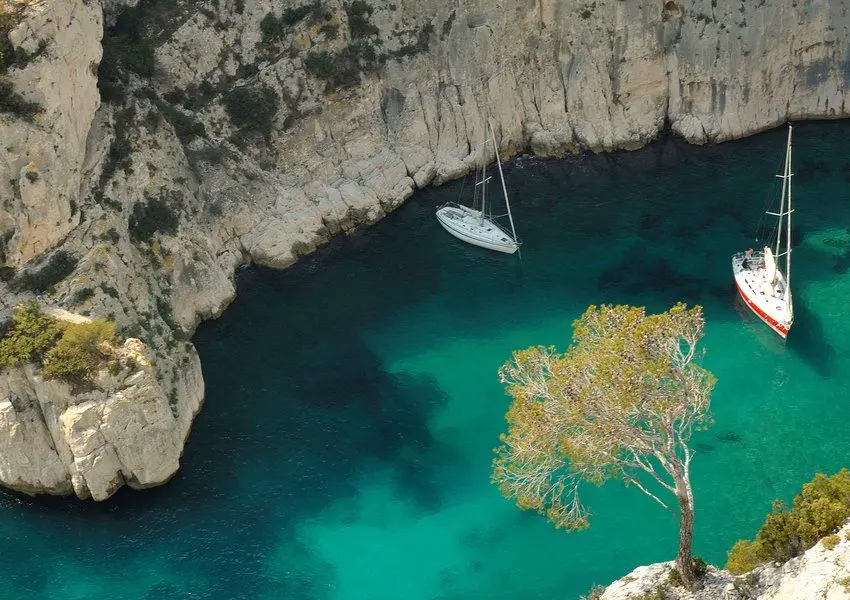
Calanques National Park, Marseille
An enchanting natural wonder on the coast by Marseille. Rocky inlets to admire on foot or from a boat, along with a wealth of scenery and protected wildlife. The national park stretches between Marseille, Cassis and La Ciotat, where the Calanques massif creates a truly unique landscape. The area is a paradise for divers, too.
Photo: Foto: Marseille Tourisme (https://www.marseilletourisme.fr/)
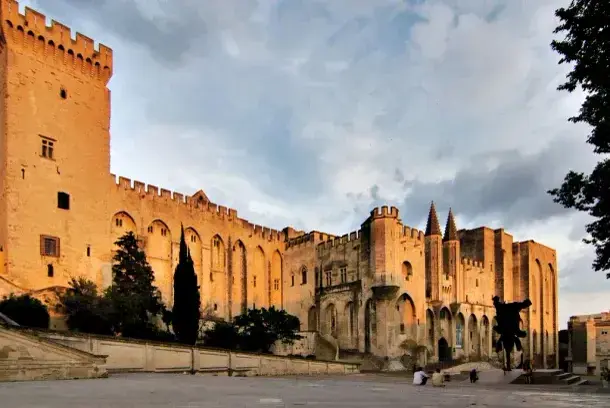
Palais des Papes, Avignon
When Rome was torn by unrest in the 14th century, Avignon became the seat of the popes for almost seventy years. Nine of them resided here in all. Through successive rebuilding and extensions their residence became the largest Gothic palace in the world, and it certainly deserves a visit – not only for its grandeur, but also for its unique frescoes, beautiful gardens and the other treasures within its walls.
Photo: Foto: Artur Staszewski/Flickr
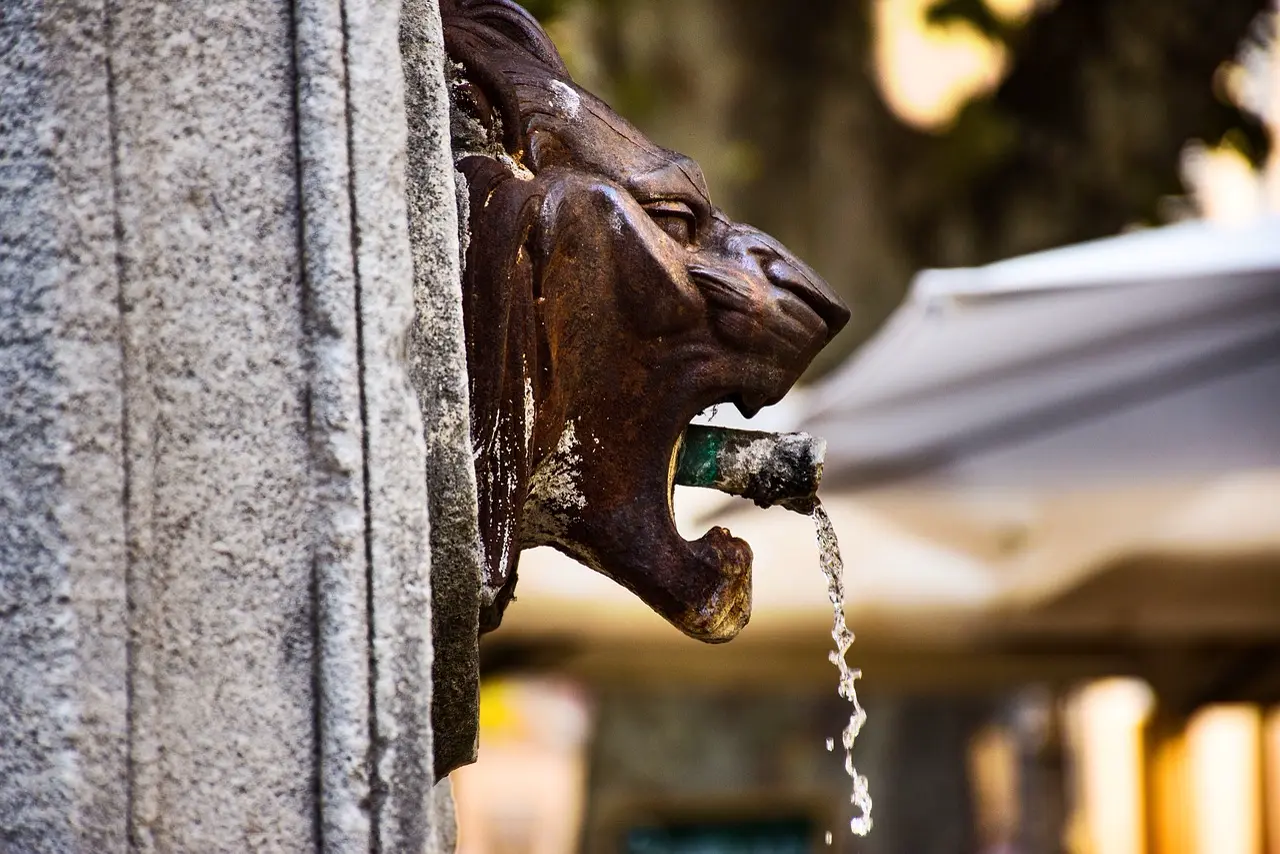
The fountains of Aix-en-Provence
Aix-en-Provence is also known as the city of a thousand fountains. Supposedly nobody has ever managed to count them, and you will find one on almost every square and crossroads. Trying to establish the exact number sounds like a fine challenge. Just make sure no new ones appear while you are counting. The tradition goes back to the Romans, who founded the town of Aquae Sextiae and its first baths by the thermal springs here in the 2nd century BC.
Photo: Foto: Needpix.com
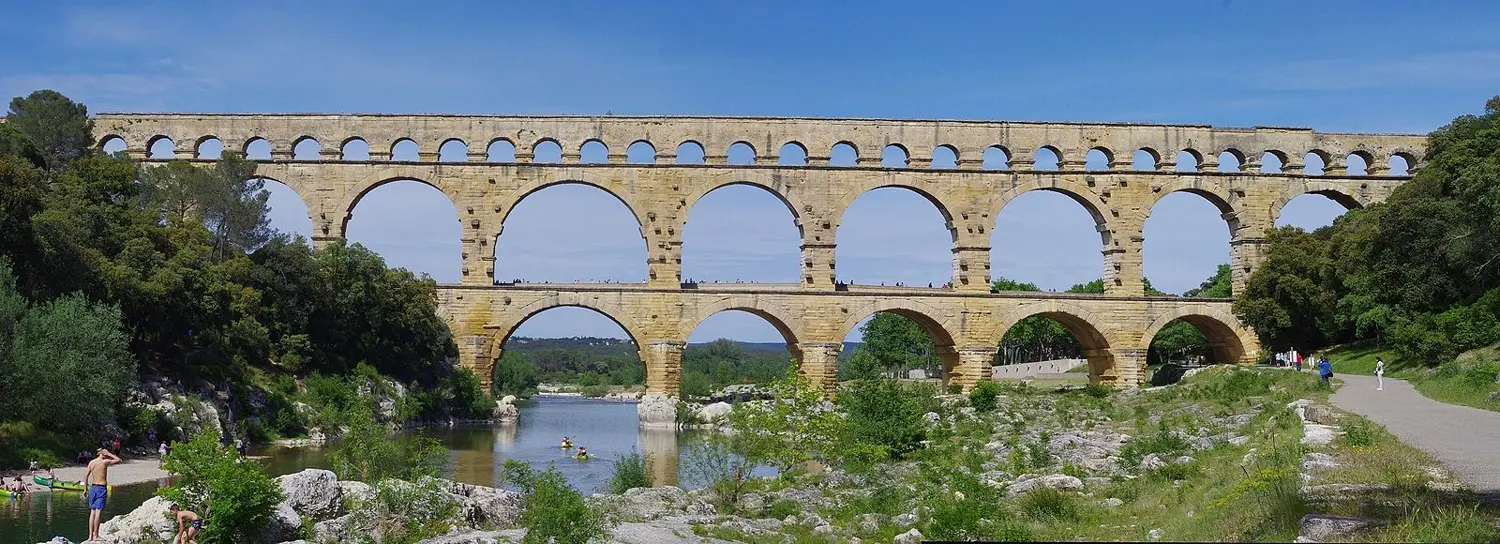
The Roman aqueduct bridge Pont du Gard, near Avignon
A monument from Roman times, built in the 1st century AD. This limestone bridge, almost 50 metres high, was part of an aqueduct some 50 km long that carried water to the city of Nemausus, today’s Nîmes. It is the tallest and one of the best preserved of all Roman aqueduct bridges. In 1985 it was added to the UNESCO World Heritage List.
Photo: Foto: Wikimedia Commons
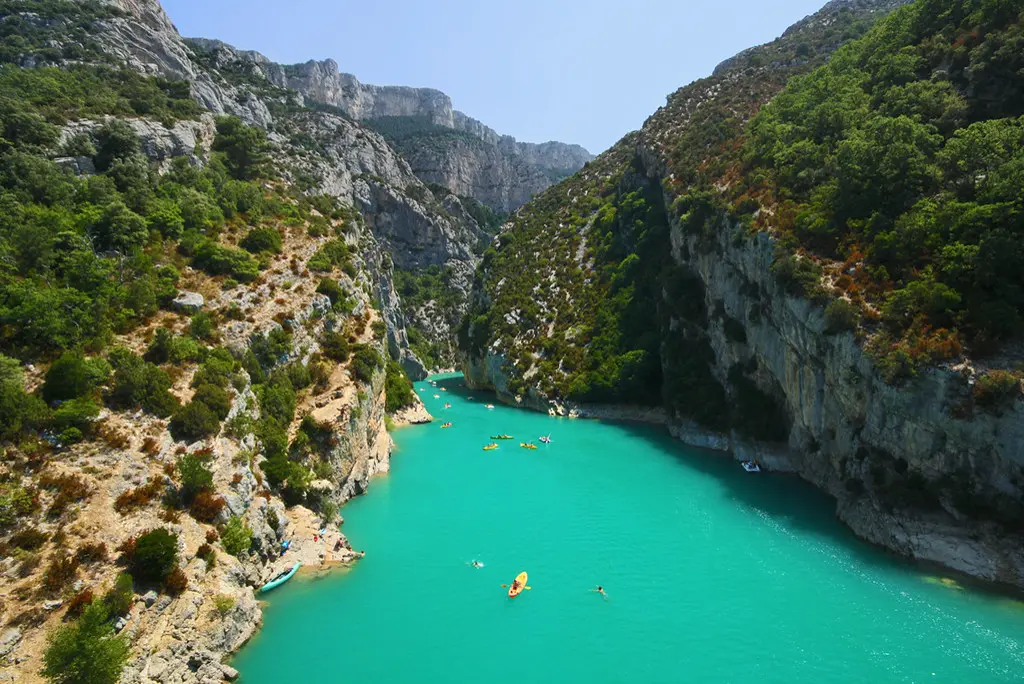
The Gorges du Verdon and Lac de Sainte-Croix
A river canyon about 25 km long, which you can admire on a mountain hike along the ridges that surround it or from a boat on the river. The river flows into an artificial lake that is a centre for water sports.
Photo: Foto: Flickr, Miguel Virkkunen Carvalho (https://www.flickr.com/photos/miguelvirkkunen/7866099788)




So when are you off to see the lavender?