Recipe
Bake the Famous Tarte Tropézienne: A Sweet Treat From Sweet Provence + a Recipe for Pearl Sugar
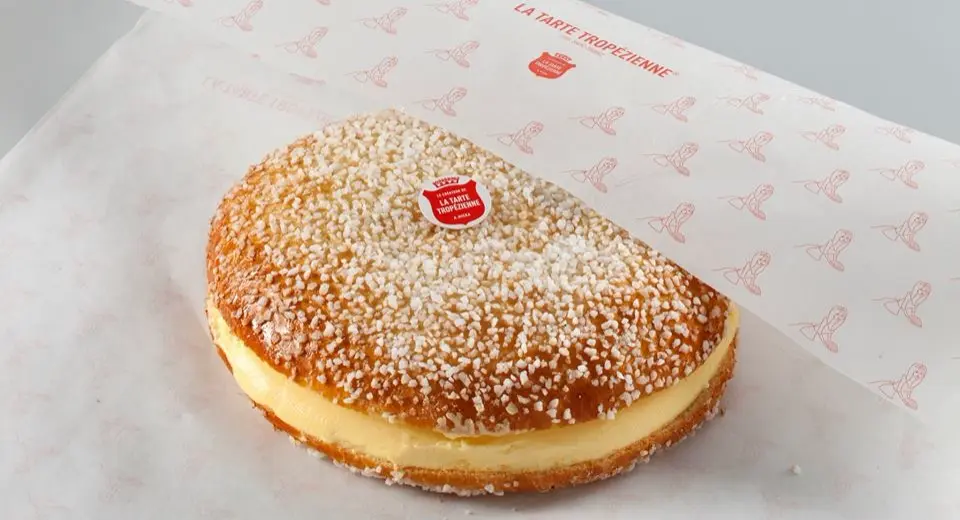
This cake, filled with cream and sometimes fruit, was brought to Saint-Tropez in the 1950s by the Polish-born pastry chef Alexandre Micka – and since Brigitte Bardot, who was in town filming And God Created Woman, took a liking to it, a new sweet sensation was born. It has become one of the iconic symbols of Provence.
Tarte Tropézienne consists of three basic parts: sweet brioche, vanilla pastry cream and whipped cream. It is best served really fresh, since brioche is a kind of sweet bread. Making the cake is spread over two days...
What you will need and how to make Tarte Tropézienne
The brioche – day one
Ingredients
- 150 ml milk
- 1/2 tsp granulated sugar
- 30 g fresh yeast
- 3 large eggs
- 200 g softened butter
- 15 g salt
- 450 g strong bread flour
- 170 g pearl sugar
- 2 tbsp icing sugar
Method
- Make a starter from the warm milk, the yeast and the sugar.
- Using a stand mixer fitted with the paddle attachment and set to low speed, mix the eggs with the starter.
- Add the flour and butter. Mix for 10 minutes on low speed and 5 minutes on high speed. Add the salt at the end. The dough will be sticky and yellow in colour.
- Then oil a bowl and put the dough in it. Cover and leave to rise overnight. The dough should double in volume.
The brioche – day two
Method
- Preheat the oven to 190 °C.
- Divide the dough into 8 pieces and roll each brioche out to a thickness of about 1/2 cm. Leave to rise again until doubled in volume.
- Brush the brioche with egg and sprinkle with pearl sugar.
- Bake for about 25 minutes until golden (use the baking time to prepare the creams).
- Leave to cool on a wire rack.
The pastry cream
Ingredients
- 500 ml milk
- 1/2 vanilla pod
- 100 g granulated sugar
- 5 large egg yolks
- 30 g cornflour
- 1 tbsp butter
- 3 sheets of gelatine
Method
- Split the vanilla pod lengthways and scrape out the seeds.
- Put the milk on to heat in a small pan with the vanilla pod. Heat until bubbles begin to form. Then add the 3 sheets of gelatine.
- Add the cornflour to the sugar and egg yolks and whisk until smooth.
- Now bring the mixture to the boil.
- Take off the heat, add the butter and stir again until smooth.
- Set the pan in a cold bath (a large bowl of iced water) and stir until the cream has cooled.
- Then pour the mixture into a bowl, cover with cling film (to stop a skin forming) and leave to cool.
- Leave the pastry cream in the fridge until completely cold and set.
The whipped cream
Ingredients
- 200 ml whipping cream
- 100 g icing sugar
Method
- Using the whisk attachment of your mixer, whip the cream until it just holds its shape, about 2 minutes.
- Add the icing sugar and whip for another 30 seconds.
Finishing
Method
- When the brioche has cooled, cut it in half horizontally.
- Gently fold the pastry cream and the whipped cream together, put the mixture in a piping bag and, using a star nozzle, pipe the cream on to the bottom half of the brioche.
- Then cover with the brioche top and dust with icing sugar!
- Note: keep the cake chilled for an hour before serving.
Pearl sugar
What is pearl sugar?
Pearl sugar, sometimes also called nib sugar, is a type of sugar often used in baking. It consists of rounded lumps of sugar that look like hailstones or pearls – hence the name. It comes in various sizes, anything from as small as a flake of sea salt to as large as a pea. When baked, pearl sugar keeps its shape and does not melt into the pastry, so it adds crunch.
What can you use instead of pearl sugar?
You can use demerara sugar, which has larger crystals than ordinary sugar, or ready-made sugar decorations.
How do you make pearl sugar at home?
Mix granulated sugar and water in a pan in a ratio of 4:1. Heat gently so that the sugar starts to clump together and form lumps. Stir occasionally. Once the lumps have formed, leave to cool thoroughly. You can make pearl sugar in a larger batch and keep it in an airtight container.