
Magazine
When a Message Gets Lost
You Have a New Message · post
The address is smudged, the recipient has moved, the return address is missing. The letter has nowhere to go. What happens to it?
Postal services all over the world had to find an answer. And they soon realized it wasn’t only about paper. It was about the secrets that travel in envelopes.
Why a Letter Goes Astray
The reasons are always the same: an illegible or incomplete address, a recipient who has moved or died in the meantime, a refused item, a missing sender. The post office first tries to deliver the letter, then to return it. When neither works, the item becomes “undeliverable.” For a long time, English had a starker name for it: a dead letter.
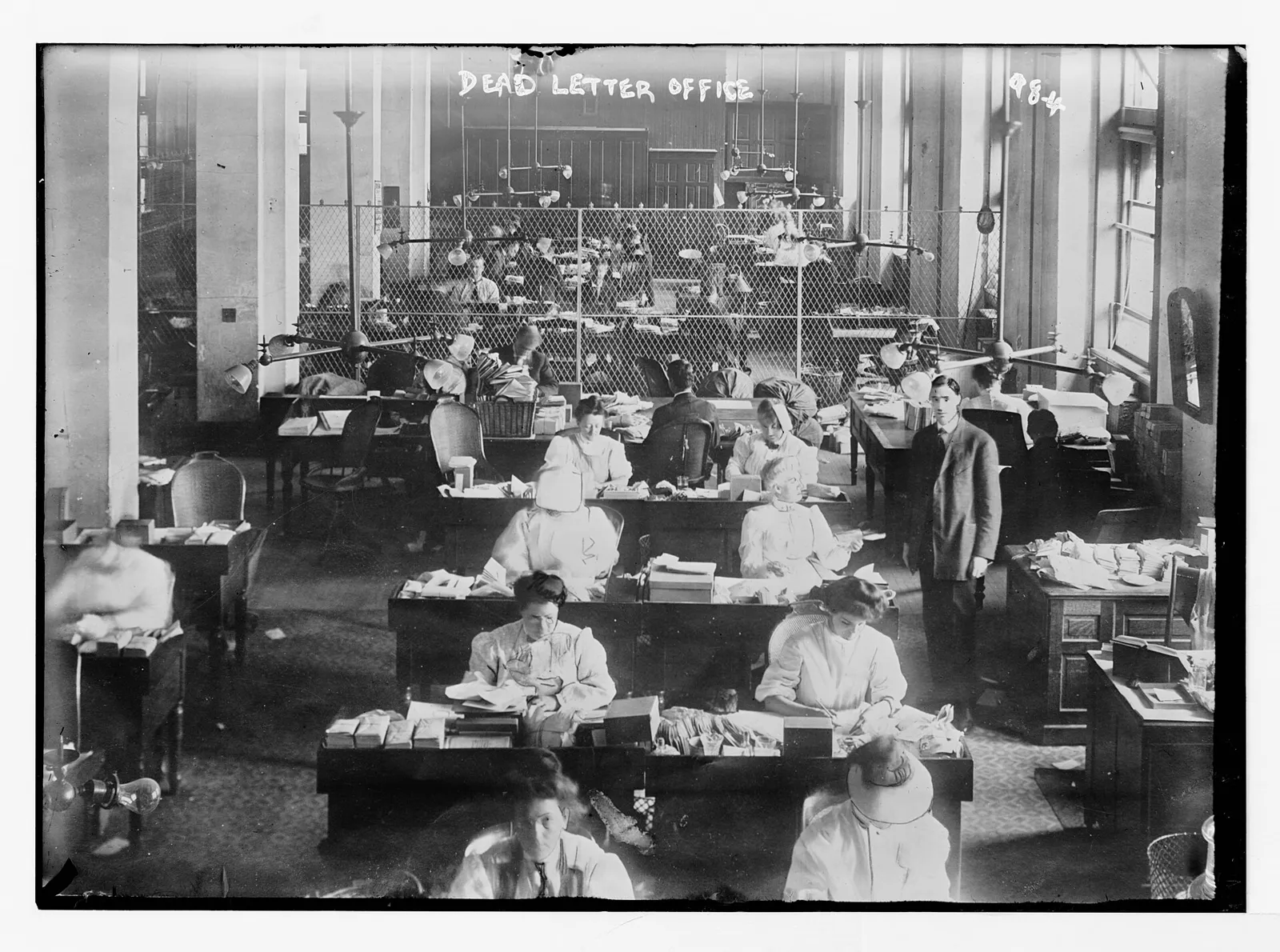
In the early 20th century, the United States had clerks who did nothing but decipher illegible addresses. From scraps of names, mangled street names and handwriting, they guessed where the writer had probably meant the letter to go.
Dead Letters and Spies
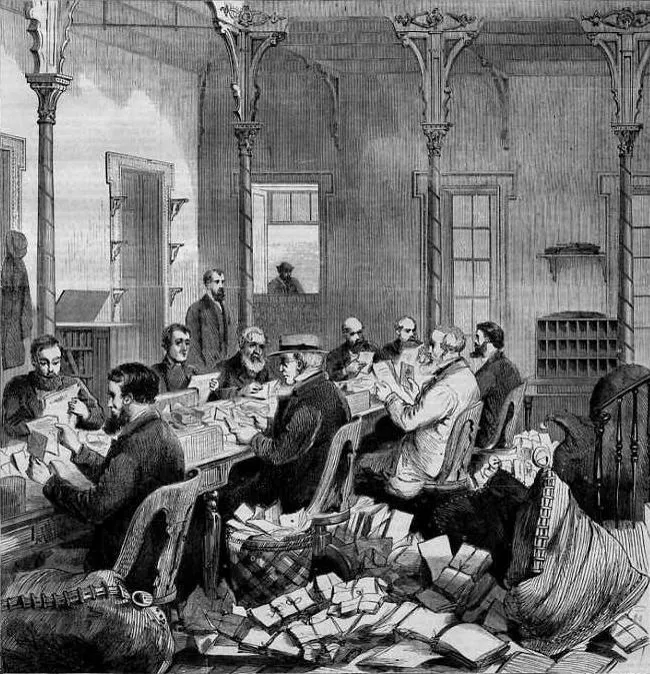
As early as October 1777, in the middle of the War of Independence, the Continental Congress instructed postal surveyor Ebenezer Hazard to go through undeliverable letters once a quarter. Among other things, he was looking for enemy plans and reports. From the very beginning, undeliverable mail was also a source of intelligence.
Five years later Congress renewed the rules, this time with the emphasis on rescuing money and valuable papers from the envelopes.
The Dead Letter Office
A central office was later set up in Washington: the Dead Letter Office. Its founding is traditionally dated to 1825. Undeliverable mail from all over the United States was brought there.
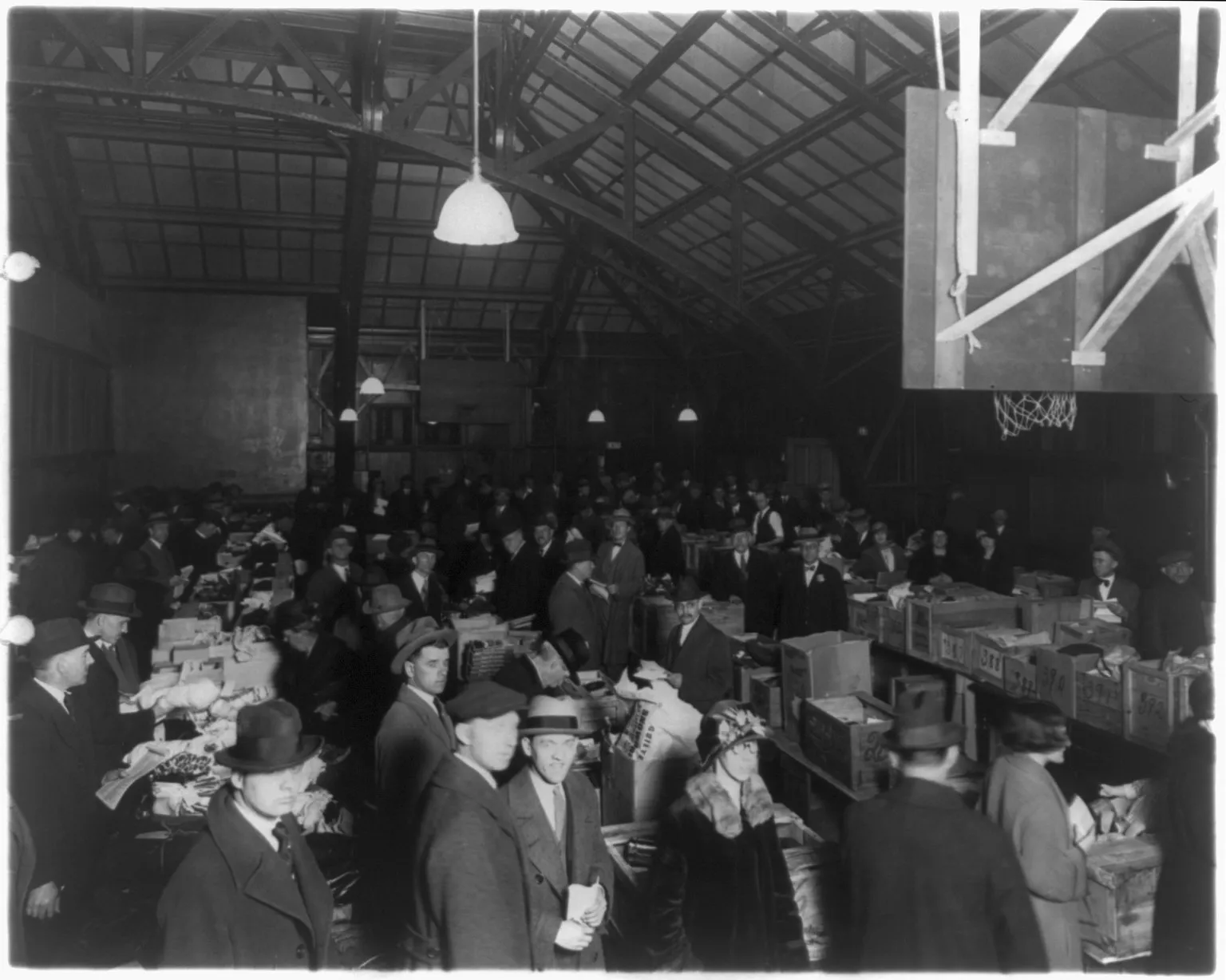
Only authorized clerks under oath were allowed to open letters there, and only for two reasons: to find the address of the sender or the recipient, and to rescue valuables. Whatever could not be returned was destroyed by law. At first it was burned; later the paper was sold for pulping. Items from parcels, which were not covered by the secrecy of correspondence, were auctioned off. In December 1882 the Washington Post advertised one such sale of “dead mail.”
Secrecy Even for Lost Letters
In 1889 the chief post office inspector wanted the office to open four letters belonging to a debt collection firm. The acting superintendent, W. G. Perry, refused. In his view the office had “no lawful authority to open sealed matter” just because somebody wanted it opened. He was backed by the assistant attorney general.
The dispute shows what undeliverable mail is still about today: an envelope may be opened only so that the message can find its way. Not so that someone can read it.
And Today? Atlanta and Brno
The US Postal Service now runs the Mail Recovery Center in Atlanta, its official “lost and found.” Its operating handbook is clear: the center opens undeliverable letters to find the name and address of the recipient or the sender.
In Czechia, this is governed by the Postal Services Act. A postal operator may open an item when it can be neither delivered nor returned. It may examine the contents only to the extent necessary for the purpose of the inspection, and it must give notice that the item was opened. Once a set period has passed, it may sell the item. Explicitly not, however, contents covered by the secrecy of correspondence. Whatever is not sold must be destroyed, and the sender may claim the proceeds within a year.
Czech Post has a depot for undeliverable items in Brno-Královo Pole. According to a 2020 report by the Czech news channel ČT24, thousands of items arrive there every month from all over the country. Once opened and checked, they are stored for about six months and then bought by a company chosen in a tender. It sells whatever is usable; the rest goes to recycling.
Slovenia or Slovakia?
A story has long been going around the internet that Slovenian and Slovak diplomats meet regularly to swap mail delivered to the wrong country. In 2017 it was repeated even by the popular British quiz show QI, which said it happens once a month in Washington.
At the time, both embassies denied it to the Washington station WTOP. Slovak diplomat Terézia Filipejová wrote that so far they had had nothing to exchange. Slovenian counsellor Borut Žunič, however, added that it wasn’t pure invention. In the 1990s he had worked at the Slovenian embassy in London, and according to him a fair amount of mixed-up mail arrived there. They collected it in a big envelope and every so often sent it over to their Slovak colleagues.
The story’s roots most likely go back to 2004. That year The New York Times quoted an unnamed Slovenian ambassador in a European capital, who said that staff of the two embassies in that city really did meet because of the mail. But no one has ever documented an official annual meeting. The only true part is that letters between two similar-sounding countries really did go astray.
In Herman Melville’s 1853 story Bartleby, the Scrivener, it is whispered that the mysterious clerk once worked in the Dead Letter Office. That is literature, not history. But people still recognize the image: messages someone wrote in hope that never found anyone.