
Magazine
Letters That Changed History
You Have a New Message · history
What if a message never arrives? And what if it reaches someone else entirely?
A handful of letters and telegrams appear in every textbook. Their real stories, though, are usually slower, messier and more human than the way they are told. A single letter does not turn history around on its own. But it can open a door.
The Letter That Waited Two Months
On 2 August 1939, Albert Einstein signed a letter to President Franklin D. Roosevelt. He had prepared it with the physicist Leó Szilárd. In it they warned that uranium fission could lead to the construction of extremely powerful bombs and that Germany might be working on similar research.
One sentence in the letter has a Czech connection: “Germany has actually stopped the sale of uranium from the Czechoslovakian mines.” It referred to Jáchymov, by then already under German control.
The letter was to be delivered by the economist Alexander Sachs. In the meantime, however, war broke out on 1 September, and he did not get to the president until 11 October. According to the Roosevelt Library, after the meeting the president said: “This requires action.”
At first the action was modest. The Advisory Committee on Uranium met on 21 October, and its first money, six thousand dollars, came only in February 1940. According to the official Smyth Report of 1945, spending stayed small until the autumn of 1941. The letter opened a door. The bomb was built by years of work, enormous sums of money and many more messages.
The Telegram the Enemy Read
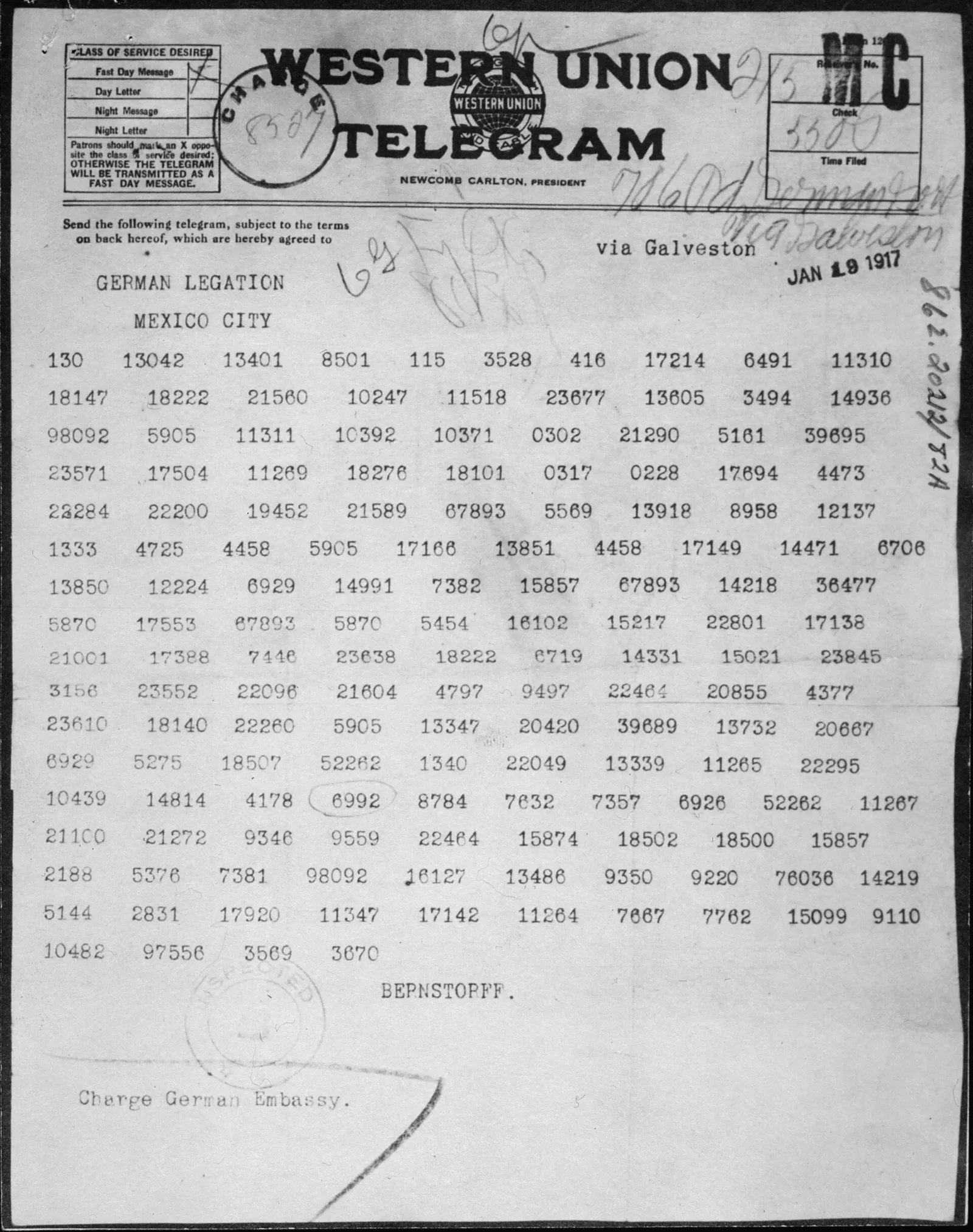
On 16 January 1917, German Foreign Secretary Arthur Zimmermann sent an encrypted telegram. Via the embassy in Washington, it reached Mexico on 19 January. It proposed to Mexico an alliance against the United States: “make war together, make peace together.” As a reward it promised help in recovering “the lost territory in Texas, New Mexico, and Arizona.”
But the telegram had been intercepted and decoded by Room 40, a British intelligence unit. The British did not want to reveal that they were reading other countries’ diplomatic mail. So they gave the Americans the version intercepted later, on its way from Washington to Mexico, to make it look like a leak in Mexico. President Wilson received it on 24 February, it appeared in the press on 1 March, and Zimmermann publicly admitted it was genuine.
On 2 April 1917, Wilson asked Congress to declare war, and war was declared on 6 April. The telegram contributed, but it was not the only reason. The US National Archives also point to the resumption of unrestricted submarine warfare, sunken ships with Americans on board and economic ties to the Entente.
Letters No One Else Was Meant to Read
Between 1767 and 1769, the governor of Massachusetts, Thomas Hutchinson, wrote private letters to London. Benjamin Franklin got hold of them there and in December 1772 sent them to Boston on condition that they not be passed around. In June 1773 Samuel Adams published them anyway. The colonies were furious, and the assembly demanded the governor’s recall.
Franklin publicly owned up to everything. In January 1774 he was humiliated for an hour before the Privy Council in London, and shortly afterwards he lost his post. He was, after all, deputy postmaster general for the colonies. The man whose job was to guard the mail became a symbol of letters that leaked.
When the Censor Reads Your Letter
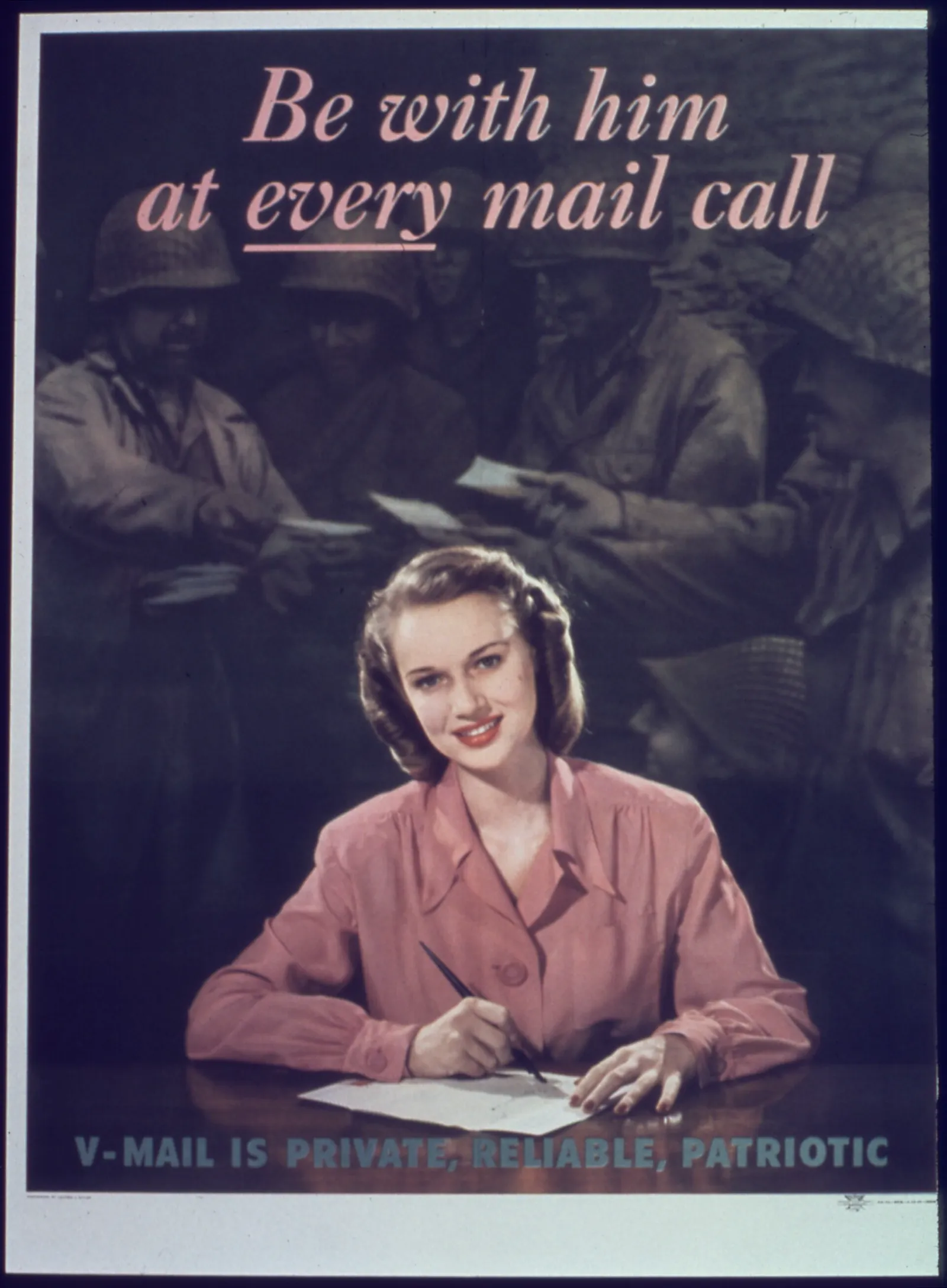
During the Second World War, Americans sent soldiers, and soldiers sent home, what was called V-mail. A letter was written on a special form, photographed onto microfilm and printed out again across the ocean. According to the USPS historian, 150,000 letters on paper filled 22 mail sacks. On microfilm they fitted into one.
Before a letter was filmed, a military censor read it and decided whether it could go on. Between 1942 and 1945, more than a billion messages passed through the hands of people they were never meant for. A tender line to a wife and a mention of a unit’s position lay on the same desk.
What If the Message Had Never Arrived?
It is tempting to imagine how history might have turned out otherwise. What if the British had not decoded the telegram? What if Sachs had lost the letter? But there are no documented answers to these questions, only hypotheses. Submarine warfare would have gone on without the telegram, and physicists would have known about uranium fission without the letter.
What we can document is this: a message has consequences only when someone reads it, believes it and decides to act. Delivered does not yet mean understood.
All the documents in this article are kept in archives and can be viewed. You’ll find the links in the sources below.