Magazine
Homing Pigeons: How They Find Their Way Home
You Have a New Message · nature
A popular idea has it that you just give a pigeon a letter and tell it where to fly. If it worked like that, the pigeon would be the perfect postman. It doesn’t.
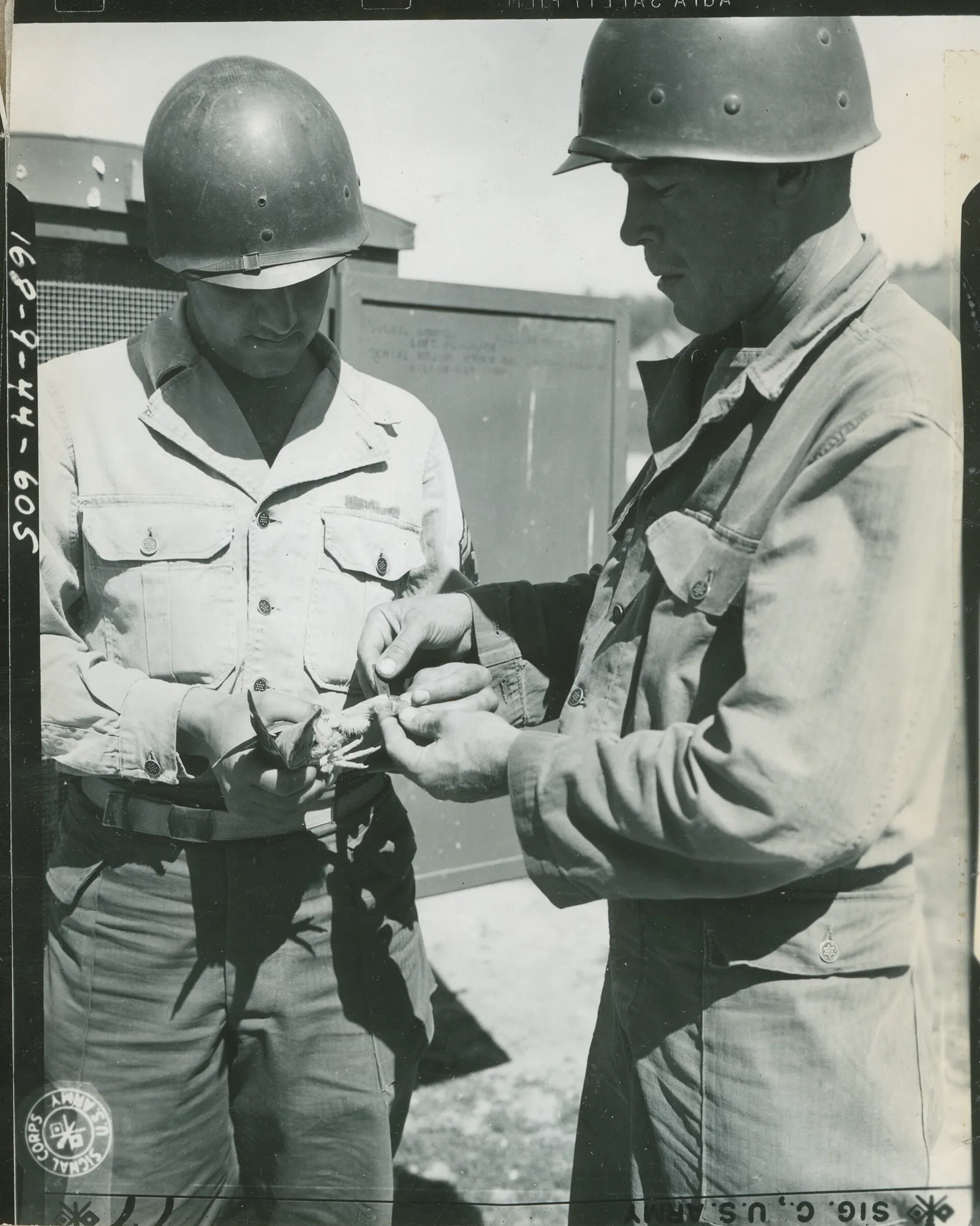
A pigeon can do just one thing, but it does it extraordinarily well: return home. And exactly how it does that, scientists still don’t fully know.
A Pigeon Doesn’t Know the Address
A homing pigeon returns to the loft where it grew up. Nothing more. For it to carry a message, someone first had to take it to wherever the message was to come from. That is why armies carted cages of pigeons to the front, and why besieged Paris sent them out by balloon in 1870.
Every pigeon was a one-way ticket. Back home.

Map and Compass
Experts describe pigeon navigation as “map and compass.” The compass gives the direction. The map tells the bird where it is in relation to home. The compass part is well researched; scientists have been arguing about the map for decades.
Pigeons steer by the sun, using an internal clock to do so. When their clock is shifted in an experiment, their flight direction shifts predictably too. They can also sense the Earth’s magnetic field. Where exactly their magnetic “sensor” sits, though, is unclear. Iron-rich cells in the beak, long thought to be the compass, turned out in 2012 to be cells of the immune system.
Smells, Sounds and Motorways
There are several hypotheses about the “map.” Pigeons without a sense of smell don’t return from unfamiliar places, so perhaps at home they learn the smells the wind brings from different directions. Critics object that smell merely “switches on” navigation without containing it. The geologist Jonathan Hagstrum, for his part, suggests that pigeons hear the very low-frequency sounds of the landscape around their home. He himself calls for more testing.
One thing has been documented precisely, thanks to GPS: in familiar terrain, pigeons fly by landmarks. Each bird develops its own route home and sticks to it, even when it isn’t the shortest. Pigeons near Rome even followed motorways and turned off at major junctions.
Cher Ami: Hero or Legend?
The most famous war pigeon is called Cher Ami. According to the story as it is usually told, in October 1918 the bird carried a message from a surrounded American battalion that was being shelled by its own artillery, and so saved hundreds of soldiers. It arrived with one leg almost shot off. Today it stands, stuffed, in the Smithsonian in Washington.
In 2021, however, Frank Blazich, a curator at that same museum, showed that the link to that battalion is not documented in the archives. The bird really did survive serious wounds while carrying a message; we just don’t know where or when. The army told the story to promote its pigeon service. And one more small detail: a DNA test in 2021 confirmed that the famous “she” was actually a male.
Messengers Who Didn’t Choose This
Pigeons flew through gunfire, frost and birds of prey. Of the pigeons taken out of besieged Paris, according to Smithsonian Magazine, only 57 of 302 made it back. They belong to the story of messages just as much as people do; it’s just that nobody asked them.
A pigeon is perfect at what it can do, and helpless at whatever else people wanted from it. Perhaps that is why it makes such a good symbol for every message: it will find the way home, but it won’t write the address for you.