Mini story for Chapter 4
The Towers That Talked
Half a century before the electric telegraph, France was sending messages across the whole country without a single wire.
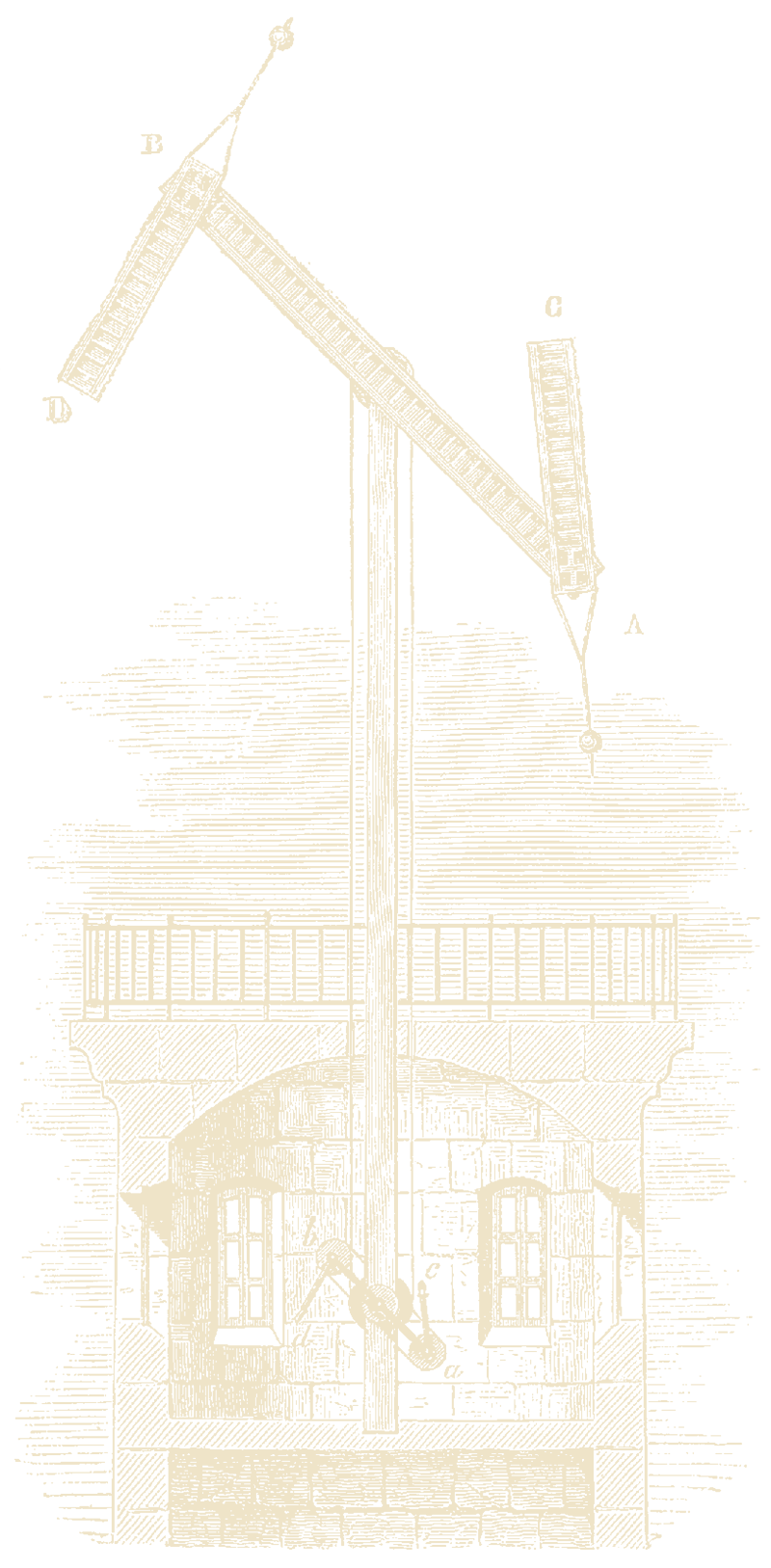
France, 1794. The revolutionary government needs to know what is happening on the northern front, and it needs to know now. So Claude Chappe builds a chain of towers between Paris and Lille. Along a route of roughly 200 km, there are 15 of them.
On the roof of each tower stands a mast with a long beam, the regulator. At its ends are two smaller arms, the indicators. The crew turns them with ropes and pulleys and watches the neighbouring tower, some 10 to 15 km away, through a telescope.
The arms did not show letters. Each position stood for a number, and a pair of numbers pointed to a specific word or phrase in a secret code book. The tower crew simply repeated the sign and passed it on. What the message meant, they did not know.
At six in the morning on 30 August 1794, the Austrians at Condé surrendered. That same day, Lazare Carnot stood up in the National Convention: “Voici le rapport du télégraphe qui nous arrive à l’instant.” In other words: Here is the report from the telegraph that has just reached us.
The network then grew like a star with Paris at its centre: Strasbourg, Lyon, Brest, Italy. At its largest, it had 534 stations and more than 5,000 km of lines. But it served only the state. It did not carry private messages, and in its later years it was used mainly for the numbers of the state lottery.