
How We Started Reading… and Why We Are Giving It Up Today
There is no friend as loyal as a book.
Ernest HemingwayBy Marcela Said
Reading is the one activity that is never a waste of time.
Do you remember your first book? Mine was probably Môj macík (My Teddy Bear). Yes, I belong to the generation that was led to a love of books by, among other things, Mária Rázusová-Martáková’s story of a plush toy and its fate.
That little board book still has its place on my shelves. I rarely pick it up these days, but I will probably never be able to part with it. It is a symbol – a compass on a road paved with thousands of other stories.
Reading became part of my identity back when I was only just learning to recognise letters. And it remains so to this day. Reading fascinates me – the incredible ability to turn our thoughts into text and pass them on to others. The possibility of preserving our knowledge, fantasies and desires in written form.
It is one of the greatest gifts we have been given as humankind. And it would be a real shame to forget it. Don’t you think?
A short history of reading
A brief history of reading
Silent reading is said to have once been an oddity
Reading comes naturally to us. We learn to read at the age of six or seven, and from that moment it accompanies us throughout our lives. And although the intensity and the time we devote to reading vary greatly between regions of the world and between age groups, it can generally be said that we live in an age blessed with literacy.
Well, it wasn’t always like that. It’s hard to imagine today, but in the 18th century most people in the world could not read – around 1820, by current estimates, only about one person in eight could.
Why and when did we start reading?
The history of reading is naturally closely connected with the history of writing. If we dust off our history books and our knowledge, most of us can probably recall terms like cuneiform and hieroglyphs. However, attempts to capture the world around us using signs existed long before them.
People originally started using various symbols and marks for purely practical reasons. According to one recent hypothesis, Ice Age hunters were already using marks beside their animal paintings to record when the animals gave birth to their young. The oldest true writing we know – clay tablets from the Sumerian city of Uruk, more than 5,000 years old – served mainly for bookkeeping: it recorded grain, livestock and property. Only later did laws, religion and literature follow.
Writing and reading experienced a massive boom in Europe with the advent of antiquity. Ancient Greece and Rome were a hotbed of literature, but also of many laws and documents. And although we already owe works such as Antigone, the Iliad and the Odyssey to the ancient Greeks, we had to wait a good few more centuries for the real boom in reading…
We read other things and… differently
In the past, reading was also limited by the choice of subjects. To be quite honest, though, there was not much choice to speak of. In the Middle Ages you could at most decide whether to put on priestly robes and immerse yourself in the Bible and the lives of the saints, or to become a clerk and delve endlessly into records of property and debts.
In ancient times we even read differently – mostly aloud. Plutarch tells how Alexander the Great read a letter from his mother in silence, and at the end of the 4th century St Augustine noted with amazement that Ambrose, the bishop of Milan, read without moving his tongue. Such passages gave rise to the popular idea that silent reading was an oddity. Today’s scholars are more cautious: people did read silently in antiquity, but reading aloud was far more common than it is now, when reading is mostly a very intimate pastime that takes place only in our minds.
Likewise, reading in bed is a relatively recent habit. As late as the 18th and 19th centuries it was frowned upon. Moralists objected to it as a private, unsupervised pleasure – and whoever gets lost in a great book may easily forget their marital duties too. The other worry was entirely practical: a burning candle beside a curtained bed was a real fire hazard…
The history of reading and books is full of other fascinating stories and curious anecdotes. I can’t help but mention at least a few more titbits from my ‘reader’s diary’.
Did you know?
- The oldest known systematically organised library stood in what is now Iraq. We owe it to the Assyrian king Ashurbanipal. It was created in the 7th century BC in Nineveh and was, understandably, full of clay tablets.
- Punctuation did not enter writing until around 200 BC, when Aristophanes of Byzantium, a librarian at Alexandria, devised a system of dots.
- In Mesopotamia, birds were reportedly considered sacred because their footprints in wet clay resembled cuneiform writing – like a message from the gods still waiting to be deciphered. So writes Alberto Manguel in A History of Reading.
- In 213 BC the Chinese emperor Qin Shi Huang (Shih Huang-ti) ordered the burning of historical and philosophical writings that did not suit him – according to a popular reading, so that history would begin with him. Manuals on medicine, divination and agriculture were spared.
Inspiration from famous libraries
Inspiration from VIP libraries
Tell me what you read
Reading is not an old-school pastime. Even today there are plenty of passionate readers among famous and successful people. Will you let their example inspire you?
Warren Buffett
The well-known investor and financier reads every day – by his own account for five to six hours. His domain is newspapers and company annual reports. He once advised students at Columbia University to read 500 pages a day: knowledge, he said, builds up like compound interest. That answers the question of where he gets all the information for running his empire.
Bill Gates
The founder of Microsoft is known to read about 50 books a year. They include popular science and specialist titles, but also fiction. He regularly shares his recommendations on his blog, Gates Notes.
Elon Musk
Another familiar face from the world rankings of successful entrepreneurs is said to have read the entire Encyclopaedia Britannica at the age of nine, and as a boy he could read for ten hours a day, mostly science fiction. So writes his biographer Ashlee Vance.
Mark Zuckerberg
The list of avid readers would not be complete without the head of Facebook. In 2015 he set himself the challenge of reading a book every two weeks and ran a public book club, A Year of Books. And although you would expect mainly books on technology or business, Mark’s scope is considerably wider. He likes to read about history, different countries, cultures and the like.
Oprah Winfrey
On her show, from 1996 onwards, Oprah regularly recommended books that had passed through her hands and caught her interest. Her book club outlived the show, which ended in 2011, and to date she has recommended more than a hundred titles.
Jeff Bezos
The founder of Amazon is an avid reader too. In his book about Amazon, the journalist Brad Stone compiled a list of titles that shaped Bezos – books that moved him forward in business, but also fiction. He has named Kazuo Ishiguro’s The Remains of the Day as his favourite novel.
Stephen King
One of the most famous horror authors in the world is also an avid reader. In On Writing he says that anyone who wants to be a writer must above all read a lot and write a lot. He himself reportedly gets through seventy or eighty books a year, and you will hardly ever see him without one.
Fill your bookshelf
Titles you should definitely not miss
Top book picks
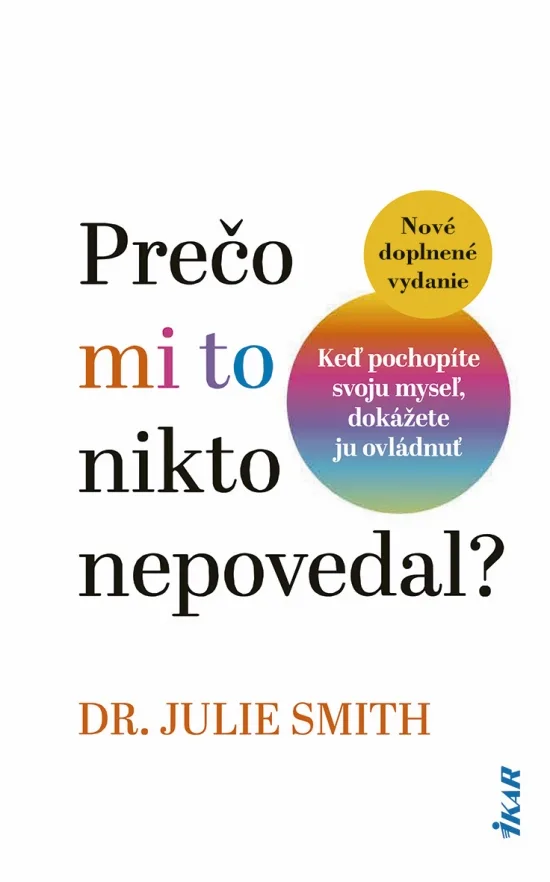
Julie Smith: Why Has Nobody Told Me This Before?
Great help even in the hardest situations life brings.

Matt Haig: The Midnight Library
Between life and death there is a library. Every book in it is a life you could have lived.
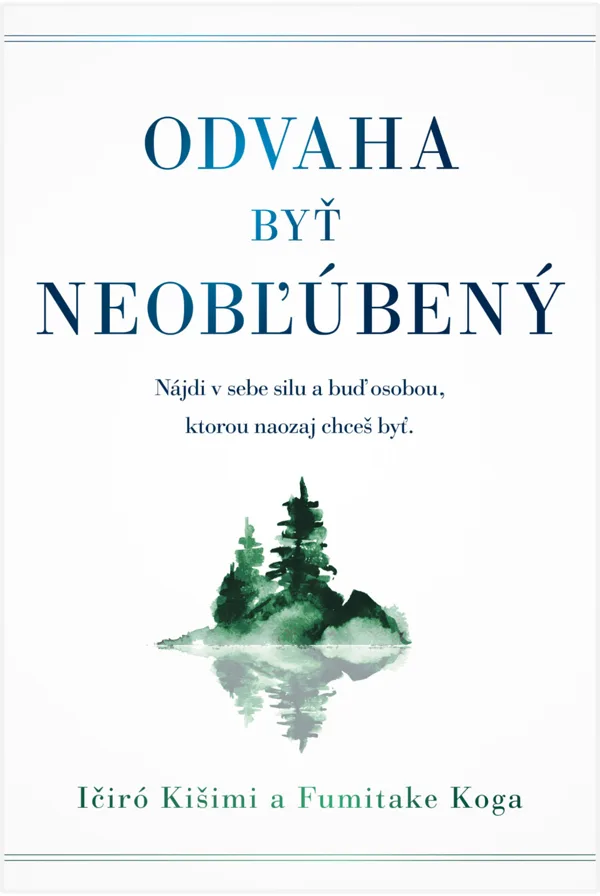
Ichiro Kishimi, Fumitake Koga: The Courage to Be Disliked
A conversation between a young man and a philosopher about how to stop living by other people’s expectations.
Choose by genre
Crime
Gripping stories you will devour almost in one sitting.
History
Because history is fascinating and full of stories.
Romance
Dream your dream of romance and a love that lasts.
Fantasy
Let yourself be carried off into a world of endless imagination.
A better me
Books whose job description is to make your world better.
Business
How to run a business and work with people – even when you don’t feel like it.
Health
Books that will help you live a slightly healthier life.
For children
The loveliest fairy tales and stories full of imagination for children.
Who reads the most
Reading statistics and facts that may surprise you
I read, you read, we read
For us, reading is so natural that it hardly seems worth mentioning. Yet it is enough to realise that 200 years ago only about one person in eight in the world could read and write, and a large part of the population could not read even in our part of Europe… And that even today, in the 21st century, there are countries where most adults still cannot read.
If we realise this, perhaps we will see the chance to immerse ourselves in stories and spend time with a good book as a truly uplifting and extraordinary gift – one that also makes us better.
What the numbers say
- 12% → 87%The share of the world’s population able to read and write around 1820 – and today (Our World in Data).
- 10 h 42 minThe time people in India spent reading each week – the most among 30 countries in the NOP World Culture Score survey (2005). Thailand (9 h 24 min) and China (8 h) followed; the Czech Republic came sixth (7 h 24 min). Global average: 6.5 hours.
- 52.8%The share of EU residents aged 16 and over who read at least one book in 2022. Luxembourg had the most readers (75.2%), Romania the fewest (29.5%) (Eurostat).
- 60.5% vs 44.5%In the EU, women read books more often than men (Eurostat, 2022).
- 40 vs 13 minutesThe daily time spent reading for pleasure by Americans aged 75 and over and by teenagers aged 15–19 (American Time Use Survey, 2022). In the EU, however, more people aged 16–29 (60.1%) than people over 65 (47.2%) read at least one book a year.
- 65% and 30%The share of American adults who read at least one print book and at least one e-book in a year (Pew Research Center, 2021).
A little sum
How many books do you have left?
We assume you read until you are 80. It is a game with numbers, not a forecast.
Reading as a science
A slightly different view of the world of reading
Reading is not a science. Or is it?
Wise people noticed a long time ago that those who read actively have it a little easier in life – in surveys they tend to be better educated, earn more and cope with problems sooner. Such figures cannot tell us what is cause and what is effect, but it certainly deserves to be properly examined… This is precisely why a whole range of scientists study reading. And what have they found?
Writing – and with it reading – has been with us for about 5,500 years. Speech as such is much older: estimates range from 50,000 to two million years. In practice, this means that our brain has not had enough time to adapt to this new activity through evolution. Unlike speech, reading has to be painstakingly learned, and we often find it challenging.
Reading requires the cooperation of several areas of the brain – visual, language, and those that govern attention and memory. Thanks to this, we are able to recognise individual letters and understand written text.
That we need in order to read
8 basic skills
There is no single canonical list. This one combines the five pillars of reading named by the US National Reading Panel (2000) with the comprehension skills described by Understood.org.
Decoding
The ability to sound out a written word – turning letters into sounds and reading even a word we have heard but never seen written down.
Cohesion
The ability to understand how sentences are built and to connect individual ideas into a coherent whole.
Comprehension
The ability to understand what we read – connecting the text with what we already know.
Phonics
The ability to recognise the connection between a sound and a letter.
Vocabulary
The ability to understand the meaning of words, their definition and context.
Reasoning
The ability to draw conclusions from the text and connect new information with existing knowledge.
Fluency
The ability to read accurately, smoothly, at a reasonable speed and with understanding of the text.
Attention
The ability to concentrate on the text and hold in working memory what we have just read.
Learn the reading techniques
Different texts, different ways of reading
SQ3R
A sophisticated method of five consecutive steps – Survey, Question, Read, Recite, Review – designed to maximise comprehension of a text. It was described in 1946 by the psychologist Francis P. Robinson. When to use it: with more complicated, structured texts and when studying.
Skimming
Quickly running your eyes over a text to pick up the main points and the gist. A widespread way of consuming everyday information of lesser importance. When to use it: a quick survey, a list of articles on the web, a first look at a text.
Scanning
A method for finding a specific piece of information in a text – a name, a number, a keyword. Ideal if you already know the general context and can happily skip the rest. When to use it: product descriptions, instructions, a shopping list, a restaurant menu.
Active reading
It allows a deeper understanding of the text. It is suitable for texts we need to think about critically and understand well. When to use it: new materials and materials we need to understand.
Detailed reading
Thorough analysis and word-by-word reading, also known as intensive reading. Each word is read slowly, with the aim of understanding both meaning and context. When to use it: detailed research, medical records, poetry.
Structure–proposition–evaluation
A method in which we first work out the structure of a text and its chapters, then its main propositions, and finally evaluate them – either in our head or in notes on paper. It is associated with Mortimer Adler’s How to Read a Book. When to use it: when studying and when synthesising information from several sources.
How to become a better reader?
- Look for keywords
- Page by page
- Make reading a habit
- Make a wish list
- Create your reading space
- Vary your speed
- Train with an app
- Take notes
- Read together
- Read to others
Reading about reading
Continue with another chapter
Why Read: 11 Reasons to Fall in Love With Reading (Again)
Books everyone should have at homeFeed Your Bookcase
And other questions about readingWhich Book Takes the Longest to Read?
Master Sun’s top 10 pieces of wisdom that you should know tooThe Best War is the One That Never Began
How to revive children’s love of booksChildren and Reading in a World of Mobile Phones
From the diary of a crazy bookworm3 Books (Not Only) for Women That You Can Get Through in a Single Weekend
What will you read today?