Magazine
When the World Smelled of Ink
You Have a New Message · letters
An old letter lies on the table. We don’t know who it was meant for, or whether its recipient read it with a smile or with a knot in the stomach. How much of a human life fits on a single sheet of paper?

Sometimes an entire courtship. Sometimes an argument over what a new country should be. And sometimes a letter that was never allowed to leave. Every story in this article rests on letters that survived and can still be read today.
Waiting for a Message, Waiting for a Person
Before the telephone, every long-distance relationship had its own postal rhythm. A letter went out, and then came the wait. For the reply, but above all for the person inside it. Even how quickly the other one wrote back was a message in itself.
That is why old letters are so full of apologies for delays, thanks for prompt replies and counted days. Paper carried words, but also the time that passed between two people.
Twenty Months of Courtship by Post
On 10 January 1845, the poet Robert Browning wrote to a poet he had never met. He began directly: “I love your verses with all my heart, dear Miss Barrett.” At the end of the same letter he added: “and I love you too.”
Elizabeth Barrett replied the very next day from her home on Wimpole Street: “I thank you, dear Mr. Browning, from the bottom of my heart.” So began a correspondence in which they wrote to each other almost daily, from January 1845 to September 1846. They married in secret and left together for Italy.
Wellesley College now holds 573 of their letters. Robert kept them all his life in an inlaid box that they fitted exactly. Years later their son published them, writing in the preface that he had only two choices: to publish them or to destroy them.
A small note in the margin: the famous “How do I love thee? Let me count the ways” is not from a letter. It is a sonnet that Elizabeth published only in 1850.
“Remember the Ladies”
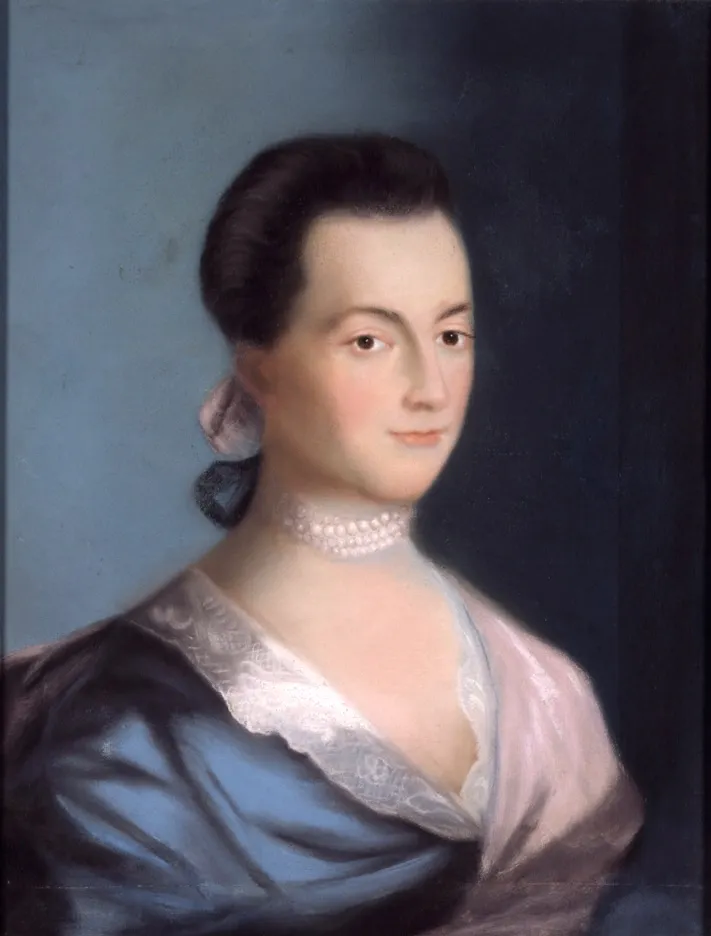
In the spring of 1776, John Adams was sitting in the Continental Congress in Philadelphia while his wife Abigail ran the household and the farm in Braintree. They wrote to each other all their lives. The Massachusetts Historical Society’s archive now makes more than eleven hundred of their letters available.
In a letter written between 31 March and 5 April 1776, Abigail reminds him that a new code of laws is being drawn up: “I desire you would Remember the Ladies, and be more generous and favourable to them than your ancestors. Do not put such unlimited power into the hands of the Husbands.”
John replied on 14 April: “As to your extraordinary Code of Laws, I cannot but laugh.” Abigail was not asking for the vote in today’s sense. She wanted the law to limit men’s power over their wives. The letter is now one of the most quoted texts in American history. Its recipient laughed at it at the time.
A Birthday Invitation from the Edge of the Empire
Around the year 100, on Rome’s frontier in what is now northern England, Claudia Severa wrote a wooden tablet to her friend Sulpicia Lepidina. She invites her to her birthday celebration on 11 September. A scribe wrote most of the text, but Claudia added the greeting at the end in her own hand.
It is an ordinary invitation, no affair of state. Perhaps that is exactly why it ranks among the most moving finds from Vindolanda.
You can open the whole invitation in the original, in Latin transcription and in English translation in our mini story An Invitation From Vindolanda.
The Letter That Could Not Be Sent
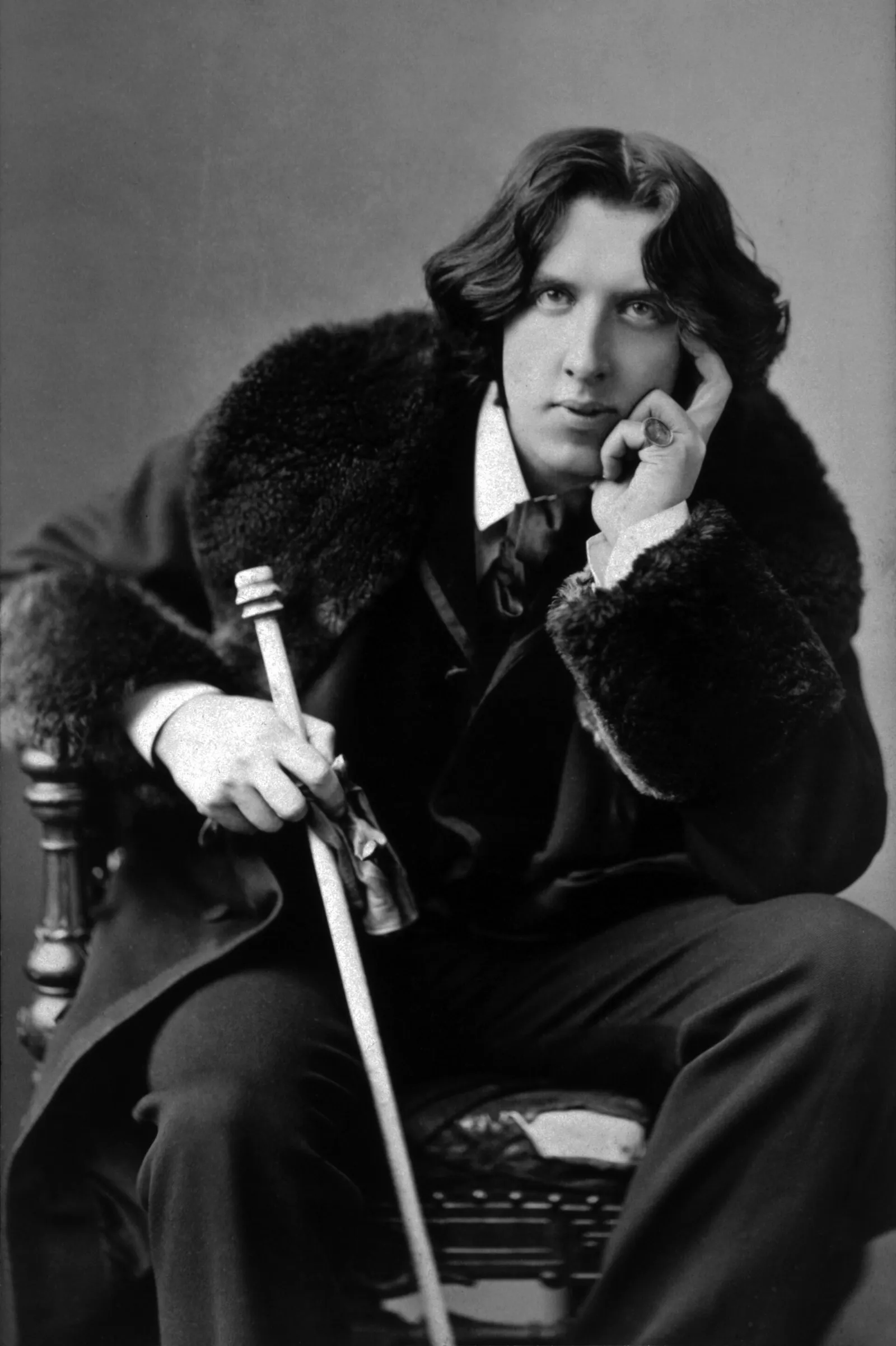
In 1896 and 1897, in Reading Gaol, Oscar Wilde wrote a long letter to Lord Alfred Douglas. According to the British Library it runs to some fifty thousand words. He could not send it from prison. He was handed the manuscript only on his release and entrusted it to his friend Robert Ross.
In 1905 Ross published an abridged version under the title De Profundis. He then gave the manuscript to the British Museum on condition that it stay closed until 1960. The full text did not appear until 1962. The letter took more than sixty years to reach the public.
Reading a Letter Today
A manuscript gives away more than its words. A crossed-out line, a word squeezed in above the line, paper folded several times to fit into the envelope. In letters we also see what the writer did not want to say out loud but could not quite erase.
That doesn’t mean a digital message can’t be personal. It can. It just rarely leaves behind a box it would fit into exactly.
The letters in this article survived because someone kept them: in a box, in a family archive, in a museum, in the mud of a Roman fort. How many others disappeared, we will never know.