Magazine · Starry Night · darkness
Why Darkness is Disappearing: The Pollution You Can Switch Off
Night used to be dark all by itself. Today we travel to find darkness and mark dark-sky parks on maps as rarities. Yet the dark has not gone anywhere. We have simply outshone it.
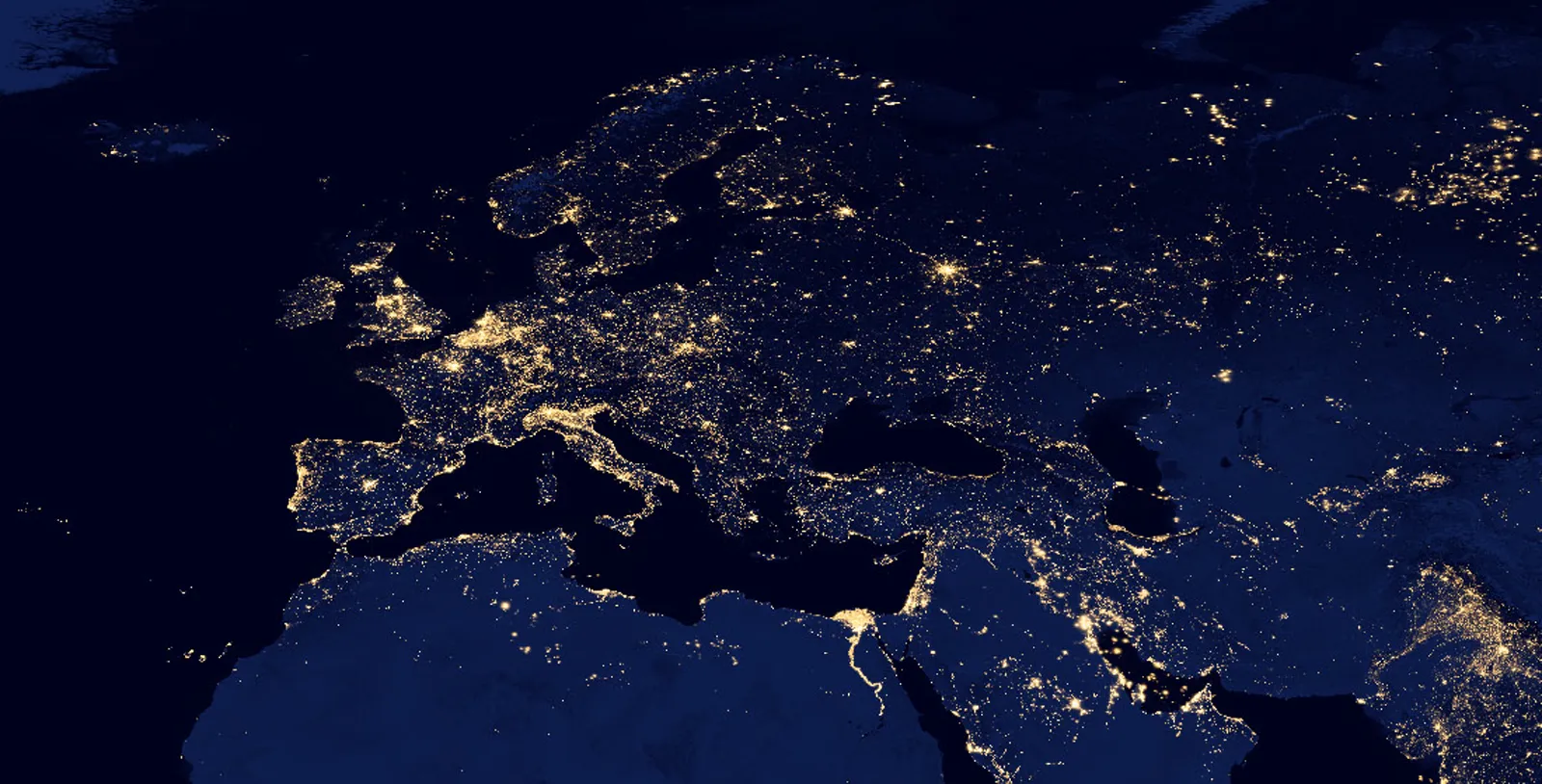
In the main story you saw how many stars are vanishing from the sky. Here we look at where the light comes from, whom it bothers besides stargazers, and what can be done. Good news first: light pollution, says the organisation DarkSky, is reversible.
How light escapes
DarkSky International distinguishes several forms of light pollution. Skyglow is the brightening of the night sky over inhabited areas. Glare is excessive brightness that causes visual discomfort. Light trespass means light falling where it is neither intended nor needed, such as your bedroom.
The sources are mundane: street lamps, advertising, shops, offices, factories, floodlit stadiums and light from buildings. The Czech Ministry of the Environment sums it up as three mistakes. Light points where it should not: at the sky, into the landscape or into windows. It shines when nobody needs it. Or it has an unsuitable spectrum, chiefly white light with a high share of blue.
What the measurements say
The atlas of artificial night sky brightness, compiled in 2016 by Fabio Falchi’s team, showed the scale of the problem. The Milky Way is hidden from more than a third of humanity. Eighty-eight per cent of Europe’s land area experiences light-polluted nights.
You know the pace from the main story: according to Christopher Kyba’s 2023 study, the sky brightened by an average of 9.6 per cent a year. The interesting part is why satellites missed it. The authors report that brightness is rising faster than satellite measurements suggest, and put this down to changes in the colour of light and in the angle at which lamps shine. Satellites are not sensitive to every wavelength of LED light, nor to light emitted horizontally.
Who misses the dark: insects and birds
Night has pollinators of its own. In 2017 Eva Knop’s team described in Nature what happens when you turn the lights on for them. On artificially lit plots, nocturnal visits to plants fell by 62 per cent compared with dark ones. The plant under study then set 13 per cent less fruit, even though plenty of other pollinators visited it by day.
Birds that migrate at night are confused by light. For seven years researchers used radar to watch the beams of the Tribute in Light memorial in New York. While they were lit, birds gathered around them in dense flocks, slowed down, circled and called frequently. Over the seven nights studied, an estimated 1.1 million birds were affected. When the lights went off, the disruption disappeared.
These are two studies from two particular places, not a bill for the whole planet. Both, however, show that the effect of light can be measured.
And you: sleep and the body clock
Your body keeps its own day and night, and its strongest cue is light and dark. NIGMS, part of the US National Institutes of Health, describes it simply: in the evening the master clock tells the brain to make more melatonin, and you grow sleepy. Light from electronic devices at night can confuse that clock.
The same source states that long-term sleep loss and continually shifting rhythms can raise the risk of obesity, diabetes, mood disorders, and heart and blood pressure problems. Handle that with care: it is a statement about disrupted rhythms, not about one lamp outside the window. How much is down to street lighting and how much to a screen in bed, this source does not say.
Five principles of good lighting
DarkSky and the Illuminating Engineering Society (IES) have published five principles for responsible outdoor lighting. They are short and can be tested on the lamp above your own front door.
Useful: light only where the light has a clear purpose. Targeted: shielding and careful aiming send light downwards, not to the neighbours or the sky. Low level: no brighter than necessary. Controlled: a timer or a motion sensor dims the light or switches it off when nobody needs it. Warm-coloured: as little short-wavelength, blue-violet light as possible.
The principles are also available in Czech and Slovak.
An example: what the Czech Republic is doing
The Czech Ministry of the Environment has worked on the subject systematically since 2017, and in 2018 the government approved a paper on tackling it. A technical standard on limiting the unwanted effects of outdoor lighting has been in force since 1 March 2023, covering everything from street lamps and sports grounds to advertising. The ministry itself adds that the standard is not yet legally binding and serves as guidance, for example to municipalities renovating their lighting.
Since 1 July 2024, the ministry says, the subject has been part of Czech building regulations. Dark-sky areas are set up by memoranda that are not legally binding. So it is a set of recommendations rather than a ban, but mayors do have something to lean on.
Darkness does not need to be manufactured. It is enough to stop diluting it. You can start with the lamp above your own door: let it shine downwards, warmly, and only when someone is coming. The stars will not say thank you, but they will be visible.