Magazine · Colours and nature
Nature in Pink: How Mother Nature Uses the Colour Pink All Around
When we think of pink in nature, our first thoughts might gravitate towards flora and fauna, but one must not overlook the skies. The cosmos hosts a celestial canvas, often brushed with pink hues, such as in the iconic Lagoon Nebula.
This sprawling stellar nursery, located roughly 4,000 to 5,000 light-years away, is resplendent with pink and rose shades resulting from hydrogen gas excited by ultraviolet light from hot, young stars.
01 / 07
Gems and Minerals: A Blush Beneath the Surface
Venturing beneath the Earth's surface, we find a wealth of pink-hued minerals and gemstones. Rose quartz, with its pale to deep pink colouration, is often associated with love and healing in crystal lore. Pink diamonds, among the rarest and most valuable gemstones, owe their stunning colour to a process called plastic deformation – a distortion of the crystal lattice under intense heat and pressure. Rhodochrosite, a striking mineral, boasts bands of bright pink, further showcasing the geological reach of this versatile colour.
02 / 07
Floral Fancies: A World of Pink Blooms
In the botanical world, pink flowers are both abundant and diverse, ranging from soft blushes to deep fuchsia. Cherry blossoms, symbolic of transient beauty in Japan, bloom in breathtaking shades of pink each spring. The pink lady's slipper, a type of orchid native to North America, is another fine example. Meanwhile, the Amazon water lily, Victoria amazonica, showcases a mesmerising transformation: its flowers open white on the first night and, after pollination, turn pink by the second.
03 / 07
Creatures in Pink: Nature's Palette on Display
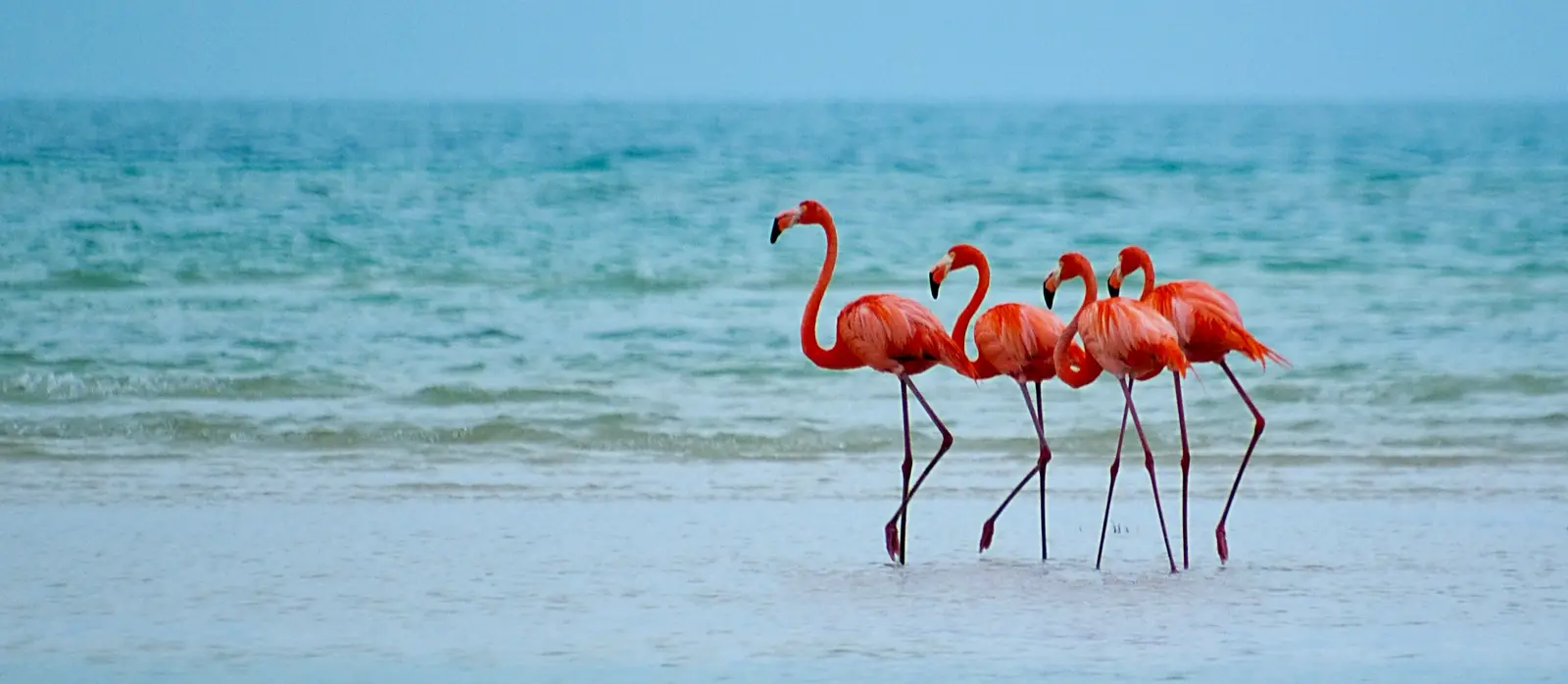
Nature's fauna also embraces pink in intriguing ways. Flamingos, with their distinctive pink plumage, are perhaps the most notable. Their colour comes from their diet, rich in carotenoids such as beta-carotene – pigments found in the algae and crustaceans they consume. Similarly, the roseate spoonbill, a wading bird found from the southern United States to South America, gets its pink colouration from its food.
04 / 07
The pink dolphin
Beyond birds, aquatic life also features pink. The pink dolphin, also known as the Amazon river dolphin, is a vivid example, its colour varying from a dull grey-pink to a bright flamingo pink.
05 / 07
Natural Curiosities: Pink Wonders of the World
There are also unique natural phenomena where pink takes centre stage. Australia's Lake Hillier is famous for its vibrant pink waters, attributed to the presence of certain salt-loving algae and bacteria. Similarly, Senegal's Lake Retba, or ‘Lac Rose’, owes its strawberry-milkshake colour to Dunaliella salina, a salt-loving alga that thrives in its salty waters. Both lakes depend on that salinity: after rains and flooding in 2022 they lost their colour, and it has been returning only gradually.
06 / 07
Pink Adaptations: The Role of Pink in Survival and Signalling
In nature, pink is more than just a pretty colour. For flowers, bright hues can attract pollinators, essential for their reproduction. In animals, colours can serve as warnings, mating displays, or camouflage. The pink orchid mantis, native to the rainforests of Southeast Asia, goes a step further: it doesn't merely hide among orchids, it resembles a flower so closely that pollinating insects fly right up to it – and become its prey.
07 / 07
Environmental Factors: The Influence of Climate and Geography on Pink in Nature
Geographical location and climate can greatly affect the prevalence and intensity of pink in the natural world. Alpine environments, with their unique light conditions, often showcase pink alpenglow on the peaks at dawn and dusk. The intensity of the pink colour in flamingos can also vary with changes in diet and habitat.
From terrestrial wonders to celestial spectacles, pink pervades nature in unexpected ways, painting our world with a blush that symbolises more than meets the eye. The prevalence of pink throughout our universe, from the skies above to the ground beneath, offers a fascinating insight into the creative palette of nature. A study of pink is a journey into the depths of geological wonders, the complexities of biological mechanisms, and the infinite expanses of the cosmos.
Understanding the role of pink in nature helps us appreciate the interplay of colour and life, fostering a deeper connection with the world we inhabit and beyond. Pink in nature is not merely a colour; it's a testament to the vibrancy of life itself.